Your kitchen knives are among the most vital tools you own. A good knife can last for decades if you treat it right, but conversely, without proper expert knife care expensive blades can become dull and damaged in just months. But many customers don’t realize that vigilant maintenance and simple habits can help stave off hundreds of dollars in replacement costs and ensure a better, more efficient cooking process.
Just think: a quality chef’s knife costs between £50 and £300, or more. When you come to know the proper care, that investment continues the payoff season after season. You won’t have to purchase new knives all the time, and you’ll waste less time wrestling with dull blades that flatten rather than slice tomatoes.
This guide reveals six professional tips that knife pros rely on to keep their knives sharp, safe and prepared. These are not complicated tricks that you need special equipment to perform. They’re simple practices that anyone can integrate into their cooking routine. Continue reading to learn about expert knife maintenance and why it can make all the difference when cooking (not just in your bank account!).
The True Cost of Neglecting Your Knives
But before we get into the tips, let’s first establish what happens when knives are out of sight and out of mind. Strangest of all, way back on my visit to a knife factory I’d heard that dull knives are more dangerous than sharp ones, because you have to use so much pressure. This additional force makes it more likely that the blade will slip and cut you rather than your food.
A lack of maintenance also results in knives being replaced more frequently. The average person may purchase a new knife set every 2-3 years because the blades become too dull or damaged. With proper maintenance, the same knives lasted a solid 10-20 years, even a lifetime.
Hand Wash is Always Better Than Dishwashers
The dishwasher is extremely convenient but also one of the biggest culprits when it comes to knife longevity. This easy transition from machine to hand washing is perhaps the most beneficial expert knife care habit you can adopt.
Why Dishwashers Damage Knives
A dishwasher is one of the most unkind places you can put your knife blade. The high heat can warp handles, particularly wooden ones. The harsh detergents also eat into the metal’s protective finish. Other dishes and utensils knock against your knives during the wash cycle, causing small chips and deformations in the cutting edge.
Even water jets can push moisture inside the bond between the blade and handle. This results in rust over time and a loose handle. Even stainless steel knives can get some rust spots from the dishwasher.
The Right Way to Hand Wash
Each knife is hand washed in 30 seconds. Warm water and regular dish soap will do the trick. Handle the knife, blade side outward. Wipe down the spine toward the blade with a damp sponge or soft cloth.
Wash and dry immediately with a towel. Never allow knives to air dry as water spots can result in corrosion. This speedy routine post-use inhibits buildup, so your blades stay sharper for longer.
How to Store Knives – to Keep Sharp-edged Tools Safe
The location you store your knives makes a difference. Where you store your knives is just as important as how you clean them; be sure they are stored in a dry area with good air flow. Good storage is one of the basic tenets of expert knife care that most people ignore.
Avoid the Drawer Disaster
Throwing knives in a drawer loose is like putting them in a rock tumbler. Each time you open and shut that drawer, those knives jostle against each other and whatever else is in there. This constant rubbing blunts the edges, and can even chip the blades at the tips.
This is also unsafe as it can trap a child in drawers. Sticking your hand into a drawer of loose sharp things is an accident waiting to happen.
Better Storage Solutions
Magnetic Strips: Wall mounted magnetic knife strips keep knives out of the way and easily accessible. They look professional, and they save counter space. They have very strong magnets to keep knives secure, but they are gentle enough to not damage knives.
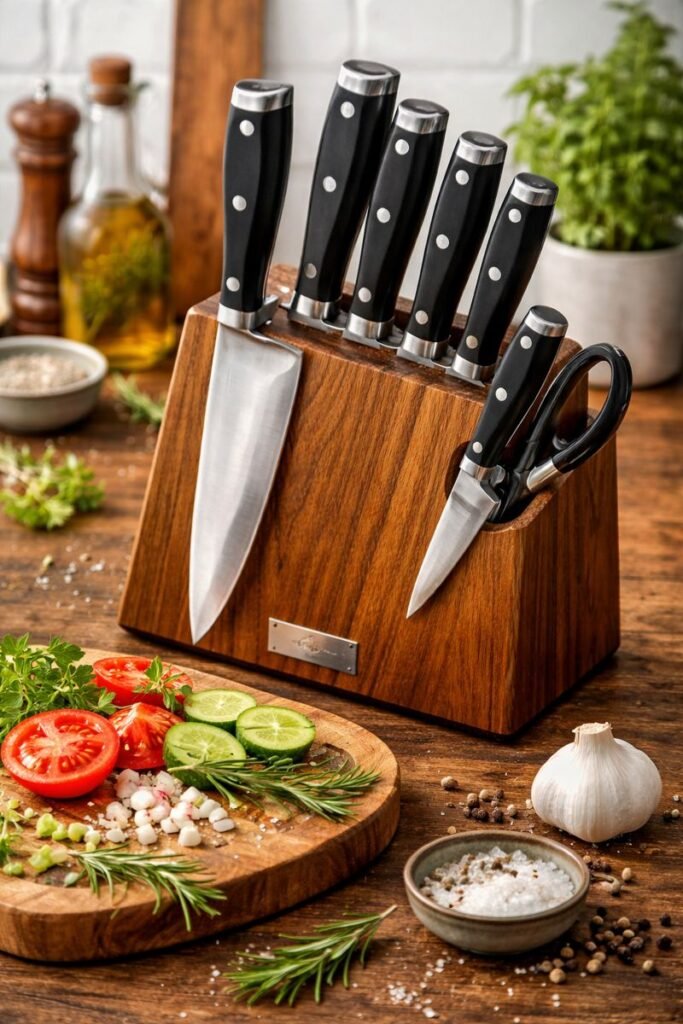
Knife Blocks: Wooden knife blocks are good for preserving edges since there are no blades to bang around in the drawer and they keep each blade in its own slot. Look for blocks that have horizontal slots instead of vertical ones. Edges on vertical slots can slowly lose sharpness, since the weight of the knife sits directly on its cutting edge.
Blade Guards: Blade guards of individual plastic knives are excellent for the knife’s protection. They’re cheap and perform well if you like to keep knives in a drawer.
In-Drawer Organizers: Custom drawer inserts with knife slots separate blades and provide organized storage in drawers.
| How They’re Stored | Cost | Footprint | Edge Protection | Blade Safety |
|---|---|---|---|---|
| Magnetic Strip | £20-40 | Wall | Excellent | High |
| Knife Block | £30-100 | Counter | Very good | High |
| Blade Guards | £10-20 | Drawer | Good | Medium |
| Drawer Organizer | £25-50 | Drawer | Very good | High |
Master the Cutting Board Choice
The surface you cut on has a direct effect on how long your knives remain sharp. It will prolong the time between sharpening intervals considerably.
Material Matters
Wood and Bamboo: I’m listing these two as a pair because any wooden cutting boards are less damaging to knife edges than steel. Instead of being dulled by cutting through hard material, the blade leaves small cuts in the surface of your board. Wood boards are antimicrobial by nature as well.
Plastic: With a good plastic cutting board, you get one that is knife-friendly and safe in the dishwasher. They are less likely than wood to harbor germs. Seek out soft plastics intended for use with knives.
Glass, Marble, and Ceramic: Do not cut on these surfaces. They’re harder than your knife blade, so each cut wears away at the edge. If you have these boards, be prepared to sharpen diligently. Reserve them for serving platters.
Size and Thickness
Select a cutting board that is big enough for you to work on without feeling cramped. A small board is also going to force you into awkward angles and if you’re like me, very high heels, which are particularly bad because of the damage they can do to knife tips. For stability, boards must be at least 3/4 inch thick.
Replace cutting boards when they get deep grooves. These are the grooves where bacteria can hide, and an uneven surface damages knife edges.
Learn Basic Sharpening Skills
There is no substitute for expert knowledge about when and how to sharpen a knife. Cooking with sharp knives is faster, safer and more enjoyable. For professional knife sharpening services and expert maintenance, you can ensure your blades receive the best care possible.
Honing vs. Sharpening
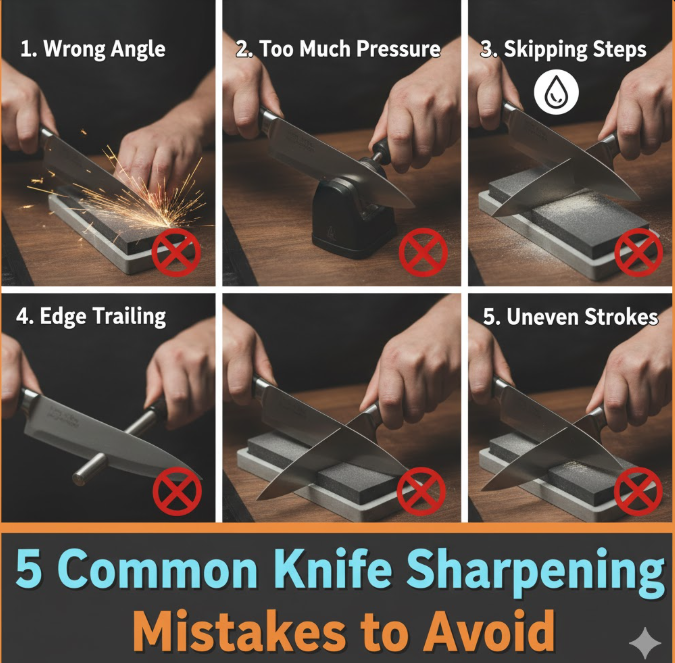
There are a lot of people who conflate these two things. Honing realigns the edge of the blade without removing metal. For every few uses, it’s also really important to hone your knives with a honing steel. Sharpening is when you are removing metal to create a new cutting edge. With the right maintenance, this only has to occur every couple of months.
Honing Steel Technique
Stand the honing steel vertically with its tip on a work surface. Hold the knife blade against the steel at a 15-20 degree angle. Sweep the knife down and across the steel, from the heel to the point. Repeat 5-6 times on each side of the blade.
With this quick process you will create sharp edges and keep them in line between sharpenings, all in under a minute.
When to Sharpen
Check the sharpness of your knife by trying the paper test. Take hold of a piece of paper at the top edge. Your paper should cut with hardly any effort at all with a sharp knife. If the knife tears or tugs through, it’s time to sharpen.
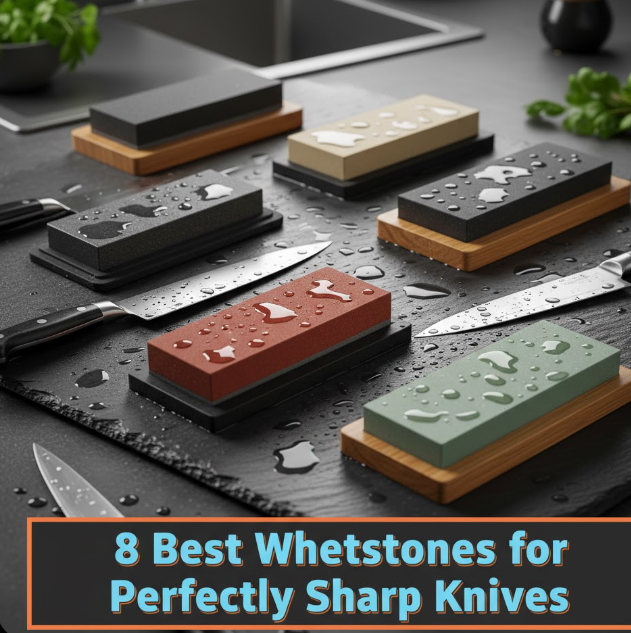
Most home cooks should sharpen their knives with a whetstone two to four times per year. Professional chefs may sharpen weekly due to heavy use.
Sharpening Options
Whetstones: These give you the most control and the best results, but they take some practice. They are £30-100 and never die.
Pull-Through Sharpeners: Easy and efficient, these are good for regular maintenance. Quality models cost £20-40.
Electric Sharpeners: Quick and consistent but pricier at £50-150. They take off more metal than manual processes.
Professional Sharpening: Fees of £5 to £10 per knife. Many kitchen stores lend this service. It is worth doing once or twice a year, even if you sharpen your knives at home.
Use the Appropriate Knife for the Task
It is maybe one of the most overlooked, simple yet important practices in expert knife care: using knives for their purpose. For any given task, the wrong knife doesn’t just work worse it’s also bad for what you’re cutting and damages the blade.
Match the Blade to the Task
Chef’s Knife: Your workhorse for much of your cutting, slicing and chopping. Great for vegetables, meat, and more. Don’t take it anywhere near bones or frozen food.
Paring Knife: Small detail work such as peeling, trimming and mincing garlic. Not meant for large vegetables or to cut through fibrous material.
Serrated Bread Knife: Breads, cakes, tomatoes and soft fruits. Cuts without crushing with saw-toothed edge. Avoid using on cutting boards longer than necessary it will ruin the serrations.
Boning Knife: Knife for meat and bone separating, with a flexible blade. Not suitable for general chopping.
Cleaver: Heavy lifting such as cutting up poultry and breaking through small bones. Its thick, heavy blade does jobs that would be hard on most knives.
What to Avoid
Do not use kitchen knives to open packages, cut wire or pry things open. These actions nick, bend or snap blades. Have a utility knife or scissors available for non-food uses.
Do not slice anything frozen with a regular kitchen knife. Allow things to thaw properly, or buy items equipped with a cleaver for cutting frozen goods.
Do not twist or pry with the blade of your knife. This may cause the tip to snap or incur stress fractures in the metal.
Regular Inspection Prevents Big Problems
Keeping an eye on your knives periodically catches small problems before they turn into costly repairs. This preventative measure is a smart expert knife care that will save you money over time.
What to Check
The Edge: Examine the cutting edge in good light. You shouldn’t notice any chips, rolls or flat spots. Minor damage can often be worked out during normal sharpening, while large chips often require professional repair.
The Handle: Look for cracks, looseness or water damage. It is often possible to tighten loose handles. Cracked handles must be replaced before they break entirely to avoid injury.
Rust Spots: Yes, even stainless steel can rust if not taken care of properly. Catch the rust early by wiping it with a rust eraser, or use fine-grade steel wool and oil. Severe rust may need professional restoration.
Balance and Feel: Your knife should feel well balanced and comfortable in your hand. If that sensation suddenly changes, examine the handle for cracks or blade for inconsistencies.
Monthly Maintenance Routine
Dedicate 15 minutes once a month to knife upkeep:
- Inspect each knife closely
- Clean handles thoroughly
- Add food-safe mineral oil to wooden handles
- Hone all blades
- Check storage solutions for damage
- Note that the knives must be professionally sharpened
This easy routine catches issues early and ensures your entire knife collection stays in top shape.
The Long-Term Savings Add Up
Now, let’s crunch some numbers on these expert knife care habits. A good set of knives is around £200. Neglected, you may change it every three years and spend £600 over nine years. Include the price of dull knife accidents emergency room visits average £1,500 according to information obtained from a review done by Consumer Reports — and the financial toll adds up quickly.
Treated properly, that same £200 set of knives can serve you for 20 years or more. Professional sharpening twice a year is £40 a year or £800 over 20 years. The bottom line: Your total investment in 20 years worth of well-made knives ranges from £1,000 versus £600-2,000+ with poor care and frequent replacements.
The time savings matter too. Prep time is dramatically reduced by sharp, well-maintained knives. What may take 5 minutes with a dull knife might take 2 with a sharp one. Those minutes can add up to hours saved over thousands of meals.
Building Lasting Habits
The wonder of good knife hygiene is that it really does become second nature when you make it part of your routine. Just hand wash your knife as you clean up from cooking, it takes seconds. Reaching for the honing steel before prepping a meal becomes muscle memory. These tiny behaviors add up to big benefits.
Begin by choosing one or two of the tips featured in this guide. Perhaps start with hand washing and mindful storage. Once those become habitual, add one more development say regular honing. Before you know it, you’ll be going through the full motions of knife care without a second thought.
Your knives are valuable investments, so protect them like one. They’re things you interact with nearly every day, and they have a very direct effect on your cooking experience. Nurture them lovingly, respect their years and they will serve you loyally for decades to come. That’s the true payoff of expert knife care not just saving money, but these well-sliced minutes multiplying again and again, making your time in the kitchen more efficient, healthier and pleasurable.
Frequently Asked Questions
How frequently do I need to sharpen my kitchen knives?
Most home users will only sharpen their knives 2-4 times a year depending on how often you use them. Professional chefs might sharpen weekly. And the trick is to keep sharpening, honing along the way by stropping, and maintaining that sharp edge. Give it the paper test once a month to see if it’s time for sharpening.
Is it really true that I can ruin my knives in the dishwasher?
Yes, dishwashers cut the life of your knife in half. Heat, detergents and contact with other objects cause blades to dull, handles to get damaged and rust to form. Hand washing is 30 seconds and will protect your investment much better.
What is the best way to store knives in a small kitchen?
Magnetic strips perform beautifully in tiny kitchens, which they enable to use vertical wall space rather than valuable counter or drawer real estate. Or, individual blade guards allow you to store knives in a drawer without damaging edges or taking up space.
Do costly knives outlast the others?
Good knives will typically have better steel and construction technique to prevent damage and last longer on sharp edges. But even high-end knives will not last long without the right care. A well-cared-for budget knife can last longer than a neglected high-end blade. The secret is to add some basics of good quality to some expert knife care habits.
Is it worth my time and effort to learn how to sharpen knives myself or should I pay someone to do it for me?
Both approaches work well together. Learn basic honing for regular maintenance it’s simple, and prevents knives getting dull between professional sharpenings. Take your knives to a pro once or twice a year for the best sharpening. The two together make for a very desirable result, without any special skills or costly gear needed.