3 Easy Ways to Keep Your Chef’s Knife Sharp All Year
Why a Blunt Knife Hurts Your Cooking
Every home cook knows the frustration of an attempt to cut a tomato with a dull knife. Rather than slicing cleanly through the fruit, the blade mashes it and creates a mess. A sharp knife is not only easy to use but also, believe it or not, safer. When your chef knife is sharp, you prevent accidents because dull blades require extra force and are more likely to slip.
Picture your chef’s knife as the quintessential workhorse of your kitchen. Chefs who are professional treat their knives well and so should you. The good news is, keeping a sharp edge doesn’t necessarily require expensive special equipment or professional-level skills. With just three simple methods, it’s easy for anyone to maintain a chef knife sharp all year round.
The general perception of knife sharpening is that it’s complex and time-consuming. That’s not true. So that the techniques we’re about to share can become second-nature to you in the kitchen, with a few minutes of practice. You’ll save money from not having to buy knives as often, and your culinary life will be easier and more enjoyable.
The Distinction: Honing vs Sharpening
Before we get to the three approaches, let’s dispel a common confusion. Overall, a lot of people tend to use “honing” and “sharpening” interchangeably (though they don’t mean the same thing). They don’t.
Sharpening grinds away metal, leaving a fresh edge on your knife blade. You do this less often — say, two or three times a year, depending on how much you cook.
Honing straightens out the edge and does not remove any metal. This is something you should do regularly, weekly if you cook a lot.
Here’s a simple comparison:
| Aspect | Honing | Sharpening |
|---|---|---|
| Frequency | Once a week or several uses | 2-4 times a year |
| Metal Removal | None | Yes, small amounts |
| Tool Used | Rod or honing steel | Whetstone or professional service |
| Time Consumption | 30 seconds to 1 minute | 10-20 minutes |
| Reason | Realign the edge | Create new edge |
This is the very reason why you need to know how to keep chef knife sharp. Honing keeps it sharp between professional sharpenings.
Method 1 of 3: Getting Into The Routine on a Regular Basis
The first and simplest method to maintaining chef knife sharpness is through honing regularly. It’s an easy process that can be done in under a minute and will really improve the way your knife works.
What You’ll Need
All you need is a honing steel, also known as a honing rod. They cost $15 to $40 and last for years. Pick one that is at least as tall as your knife blade. A magnetized iteration can be helpful in that, as it catches the blade at rest.
The Basic Honing Technique
Hold the steel straight up on a cutting board. This makes for a strong position and also helps keep you safe. Grasp the shaft of the handle with your non-dominant hand.
And now take your knife into your hand. Lay the heel of the blade (closest to handle) against top of steel at 15-20 degree angle. If we go to a matchbook and want an angle, you picture that kind of a tilt on a matchbook when it is just tilted open a little bit, right?
One stroke must move the blade down and along the steel. As you slide your knife down the steel, shift from heel to tip. The sliding along should be smooth and steady. And you’ll hear a gentle ring go off.
Do this on the other side of the blade as well. Do five or ten on each side. It’s all done in less than a minute, once you get the hang of it.
When to Hone Your Knife
This is the timeline that suits most home cooks:
- If you cook daily: Hone up to once or twice a week
- If you cook multiple nights per week: Hone weekly
- If you cook sometimes: Sharpen before each prolonged cooking session
In the professional world, chefs will sharpen their knives before every shift. You do not need to be that compulsive at home, but regular honing is the easiest way to keep chef knife sharp between proper sharpenings.
Common Honing Mistakes to Avoid
These are things I see a lot of people do wrong when honing:
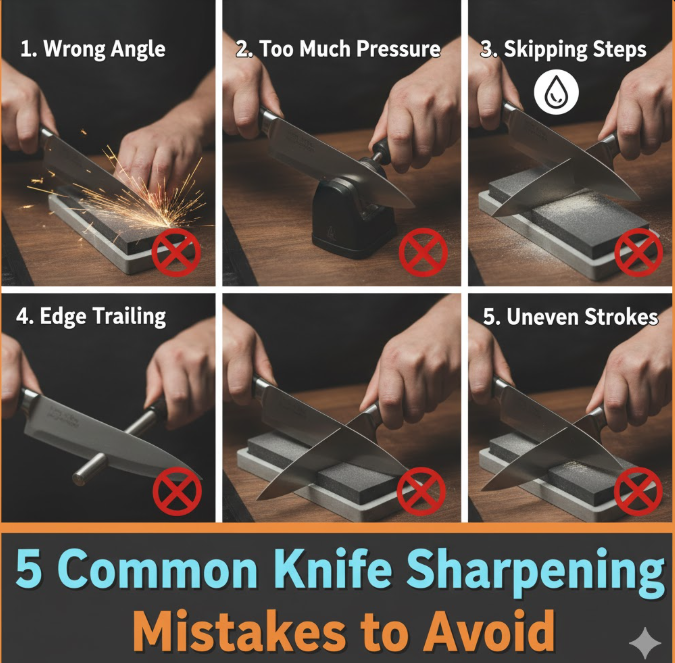
Applying too much pressure: You’re realigning the edge, not shoving it. Light pressure works better.
Trying to be quick: Slow, methodical strokes work better than hasty ones.
Incorrect angle: If it’s too steep or too shallow, the tool won’t perform its job correctly. Practice makes perfect here.
Uneven strokes: You’ll make a cut with the same stroke and angle each time.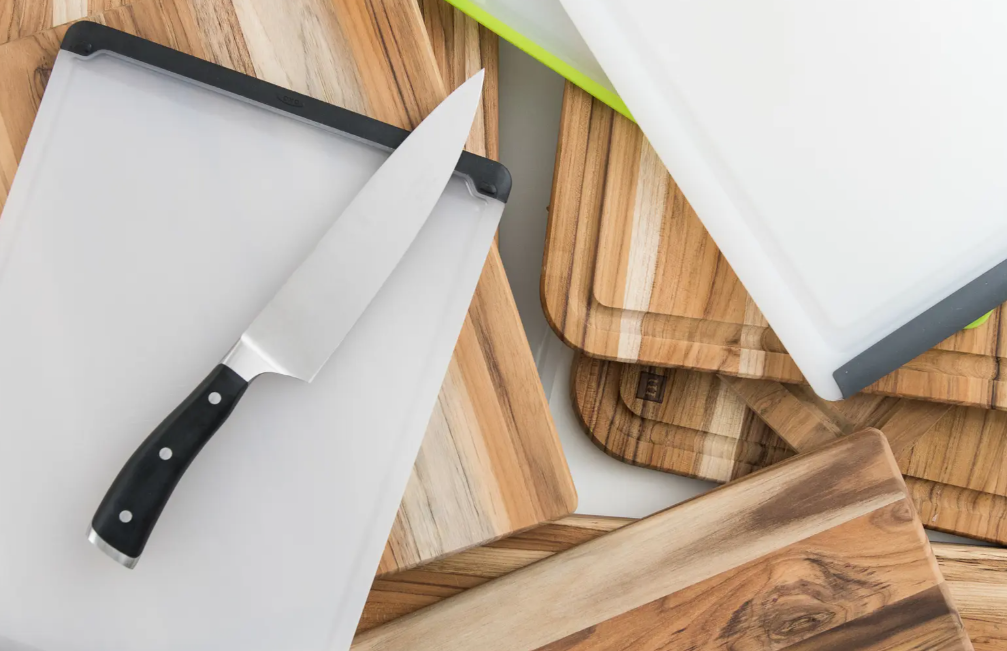
Method 2: Selecting the Proper Cutting Surface
The second way to maintain sharpness of chef knife is very simple, but it makes a huge difference: use appropriate cutting board. The surface you cut on makes a direct impact on how often your knife needs sharpening.
Why Your Cutting Board Matters
Each time your blade strikes the cutting board, it hits another substance. Your blade will get dull faster on hard surfaces. Soft surfaces protect your edge while maintaining an excellent cutting surface.
Analogous to running on different ground. When you run on concrete, it’s going to be more difficult for your joints than running on a track or grass. Your knife and cutting board? Same deal.
Best Cutting Board Materials
Wood: Nothing beats this for top gold standard knife care. Wood cutting boards are easy on knife blades yet should resist threats they face daily. Because the wood fibers will actually close up after you cut, this board self-heals minor cuts. Maple, walnut and cherry are good choices.
Bamboo: Bamboo is classified as grass, not wood, but bamboo boards tend to be eco-friendly and fairly knife-friendly. They’re a little harder than real wood but way better than plastic or glass.
Plastic: Quality plastic cutting boards that are designed for knives can be effective. Be sure to get boards clearly labeled “knife-friendly.” They’re less expensive than wood and dishwasher-safe.
Materials That Damage Your Knife
Glass: Pretty to look at, but hell on knives. Glass is hard as a rock and will ruin your blade after a couple of times. Please do not use glass cutting boards to maintain chef knives sharp.
Marble / Granite: These surfaces are similar to glass in that they’re natural stone. They are too hard, so they will destroy that edge on your knife quickly.
Hard Plastic: Poor quality thin plastic cutting boards usually become very hard and blunt your knife edges. They also develop little divots where bacteria gets trapped.
Ceramic: Ceramic surfaces are similar to glass in that they’re also too hard for routine knife use.
Cutting Board Care Tips
How to keep your cutting board and knife in tip-top shape:
Wash wood boards quickly: Don’t let them linger in water. Wash with soap and water, then dry at once.
Oil wood boards monthly: Food-grade mineral oil protects against cracking and warping.
Replace damaged boards: Deep grooves and cracks can harbor bacteria and be just the right size to catch your knife blade.
Use separate boards: Have a board designated for meat and one for vegetables to avoid cross-contamination.
Here’s a summary guide to how long boards can last:
| Board Material | Expected Lifespan | Maintenance Level |
|---|---|---|
| Quality Wood | 10-20 years | Medium (monthly oiling) |
| Bamboo | 5-10 years | Medium (monthly oiling) |
| Soft Plastic | 2-5 years | Low (dishwasher safe) |
| Glass/Stone | Doesn’t wear out | Low (but ruins knives) |
Method 3: Store Your Knife in the Right Way
The third tier of maintaining chef knife sharpness is the storing. How you store your knife when it’s not in use can also have a major impact on edge retention.
The Drawer Problem
Most people throw their knives in a kitchen drawer with other utensils. You absolutely should not do this. And every time your knife whacks against metal whisk handles, spatulas, or — horror of horrors — other knives, it’s suffering some damage. Even if you can’t see it, microscopic chips develop along the side of the blade.
A safety hazard is additionally formed by drawer storage. My hand is doing that thing where I reach into a drawer full of sharp knives and I accidentally end up cutting my finger.
Better Storage Solutions
Knife Block: A kitchen knife block in wood can be used to keep knives from touching each other and away from damage. Ensure that each slot can accommodate the knife comfortably so you don’t jam it in when ready to store. Always place knives with blade facing upwards to protect blades from dulling on wood. Knife blocks sit on your counter, making knives readily available.
Magnetic Strip: A magnetic knife strip mounted to your wall looks professional and takes care of the edges very well. Your knives hang in the open, not touching anything. This one takes up less room on the counter and allows you to see all of your knives at once. Ensure the magnetic strip can keep your heaviest knives in place.
Blade Guards: These are plastic or cardboard coverings that slip onto your knife blade. They’re especially great if you need to keep knives in a drawer. Each knife has its own guard, to help prevent edge damage. Blade guards also make excellent edge protectors for knives in transit or storage.
In-Drawer Knife Tray: A special drawer organizer with a slot for each knife. The blades are housed in protective channels which keep them separated and safe. It’s better than haphazardly tossing knives in a drawer, but you will need an entire drawer to dedicate to the endeavor.
Storage Best Practices
Observe these rules for chef knife maintenance and storage:
When storing, always clean and dry: Moisture can cause rust and corrosion.
Get them away from sources of heat: Don’t store your knife near the stove or oven.
Protect those blades: Never allow the edge to touch other hard objects.
Make knives available: If you can’t easily get at them, you won’t use them correctly.
Bonus Tips for Keeping the Knife in Best Condition
Aside from these three primary approaches, there are a few other things you can do to help maintain that chef knife edge:
Wash Knives by Hand
Dishwashers are time-savers, but not when it comes to knives. All that heat, strong detergents and all that jostling that happens during a wash cycle — it takes its toll on your blade. Knives can rattle against other objects, causing the blade to lose its edge or even to chip.
Instead, clean your knife right after use with mild dish soap and warm water. Dry it immediately with a clean cloth. This is 30 seconds worth and will safeguard your investment.
Different Knives for Different Jobs
Your chef’s knife isn’t going to be master of everything. Don’t use it to:
- Cut through bones (use a cleaver)
- Open cans or packaging (use scissors or a box cutter)
- Pry things open (use a screwdriver)
- Cut on hard surfaces
You can also maintain a sharp edge for much longer by using your knife only on what it’s actually intended to cut—food, not your table and counter.
Find Out When to Get Professional Sharpening
Everything else — even with the most perfectly honed, cutting boards, and knife storage conditions — your knife is going to need actual sharpening. Signs that it’s time include:
- Honing isn’t working or restoring cutting ability
- The blade can’t even cut tomato skin
- Onions require a lot of force to get through
- The edge is rounded rather than sharp
Most kitchen stores will sharpen knives for $5-10 per knife. Some mobile sharpening services will visit your home. For self-attenders, fine whetstones will set you back $30 to $100 and can sharpen knives for a lifetime once you learn the art. If you’re looking for professional knife sharpening services, you can find experienced providers who will restore your knives to like-new condition.
Creating Your Knife Maintenance Schedule
To maintain chef knife sharpness year-round, establish a basic maintenance habit:
Weekly: Hone your most-used knives. This is by contrast just a few minutes for your whole set.
Monthly: Wipe down and oil your cutting boards. Examine knife edges for visible damage.
Quarterly: Decide if your knives require professional sharpening. Test them on a tomato — if they can’t easily slice through the skin, they’re ready.
Annual: Give your knife storage system a deep clean. Replace worn cutting boards. If it’s not protecting your knives, maybe it’s time to upgrade your storage.
This sharpening schedule requires very little time or effort.
The Real Cost of Dull Knives
Sharper is not only better when it comes to using your chef’s knife. Dull blades cost you in a few different ways:
Safety risks: A dull knife is more likely to injure you, since force is required and the knife may slip.
Wasted time: It takes longer to cut with a dull blade so what should be a quick meal prep turns into something you almost don’t have the patience for.
Damaged food: Blunt knives crush tender foods, damaging their appearance and texture by mashing them together rather than making a clean cut.
Replacement costs: A good quality chef’s knife will run you between $50 to $200. Maintain them properly, and you won’t need to replace them for many years.
Enjoyment: Cooking is simply more enjoyable with sharp tools that work as they should.
Frequently Asked Questions
How frequently do I need to sharpen a chef’s knife?
Most home cooks will only have to sharpen 2-4 times a year. That aside, it depends on how often you cook and if you hone regularly. For heavy users, you may need to sharpen your knives monthly; for occasional cooks, a blade may hold its edge for six months.
Is it possible to over-sharpen my knife?
Yes, over-sharpening does take away metal and decrease knife life. That’s why honing a blade regularly is so crucial—you are retaining, rather than removing, sharp blades. You should ONLY need to sharpen when honing no longer restores cutting performance.
I’m honing my knife, what angle should I be using?
Ideal angle for knives to be sharpened is 15-20 degrees. Japanese blades tend to favor a more acute 10-15 degree angle. When in doubt set it at around 20 degrees, a safe bet for most knives.
Do more expensive knives stay sharper longer?
Usually yes, because of better steel and construction. But even pricey knives require some care. A $200 knife kept in a drawer and used on glass cutting boards will dull with stunning speed, while a $50 knife that’s maintained regularly and stored correctly will offer excellent performance.
Is a honing steel the same as a sharpening steel?
These words are often used interchangeably, but they describe the same tool. The rod is what you use to hone your knife — though the tool itself is often referred to as a sharpening steel, that’s not actually what it does; thus if you only hone with regularity, a proper sharpening isn’t so frequently necessary.
How can I tell if my knife is sharp enough?
The tomato test is quick and accurate. If it takes minimal force to pierce the skin of a tomato, then you’re good to go. Another test is the paper test — a sharp knife easily slices through a hanging piece of paper.
Final Thoughts on Knife Care
The skills to maintain chef knife sharp don’t need you to be professionally taught or need costly tools. The three techniques we’ve covered thus far — regular honing, having good cutting boards and correct storage — are the bedrock of great knife care. Between them, they will keep your knives performing as beautifully as the day you got them out of the box.
Begin with a good honing steel and a wooden cutting board, if you don’t already have them. Make honing an easy weekly routine, like watering plants or taking out the trash. Select a knife storage solution that keeps your knives safe instead of dull.
These little adjustments make a world of difference in the way you cook. Sharp knives are safer, they work faster, and they’re more fun to use. Rather than wrestling with tough ingredients, you’re going to be cooking beautiful meals.
Keep in mind, caring for your knives is investing in your cooking down the road. A well-cared-for chef’s knife can be one of the most reliable tools in your kitchen, lasting years or even decades, and making each meal easier to prepare. The few minutes you spend maintaining your knives each week means a cleaner cutting experience and saves money on expensive part replacements.
Begin using these three methods today, and you’ll start to see the difference right away. Your knives will cut cleaner, your food prep will be faster and cooking will become more enjoyable. That is the power of having a sharp chef’s knife all year. For more comprehensive information on knife care and maintenance, you can visit Serious Eats’ guide to knife skills.