Introduction: Why a Sharp Knife Is More Important to You Than You Realize
Have you ever cut a tomato but ended up putting too much pressure and squishing the hell out of it instead? The only thing that’s left to do in such an infuriating moment is start sharpening your knife. A dull blade is not only annoying — it’s also downright dangerous. When your knife won’t cut cleanly, you have to push harder and that’s when things slip over.
Most people don’t realize their knives are dull until they have difficulty doing basic tasks. A sharp knife is better and safer to use, whether opening packages or cooking dinner. The good news is that your knife gives you clear advance warning before it’s too late.
In this post, you’ll discover the five most important signs that say “sharpen me now!” We’ll also discuss the reasons you should never ignore these indicators if you don’t want to completely ruin your cooking experience, or worse, subject yourself to potential danger. By the end, you will know exactly when to pick up your sharpening stone or head off to a professional knife sharpening service.
Let’s jump into the indicators that your blade has gone dull.
Sign #1: The Tomato Test Goes Bad Every Time
When Your Blade Can’t Cut
Tomatoes are the classic test for knife sharpness. Their delicate skin and soft guts tell you about your blade immediately. Tomatoes are sliced through with no resistance when cut by a sharp knife. A dull one? It slips, it slides, and turns your tomato into mush.
If your knife blade doesn’t break through the skin of a tomato, it’s time to sharpen it. It doesn’t cut the tomato; it pushes down on it, squashing the tomato. You may even notice juice squirting out of the sides before you’ve completed a clean slice.
Why Tomatoes Tell the Truth
The tomato test succeeds in its task because of the juxtaposition between roughness and vulnerability, between the tough outer skin and the delicate flesh inside. A sharp knife slices through both with ease. When you are sawing back and forth just to get through, that is your very first sign.
Here’s an easy way to test it at home: Place a ripe tomato on your cutting board and slice gently downward. If the knife slips off with ease or squashes that tomato, you have a dull instrument.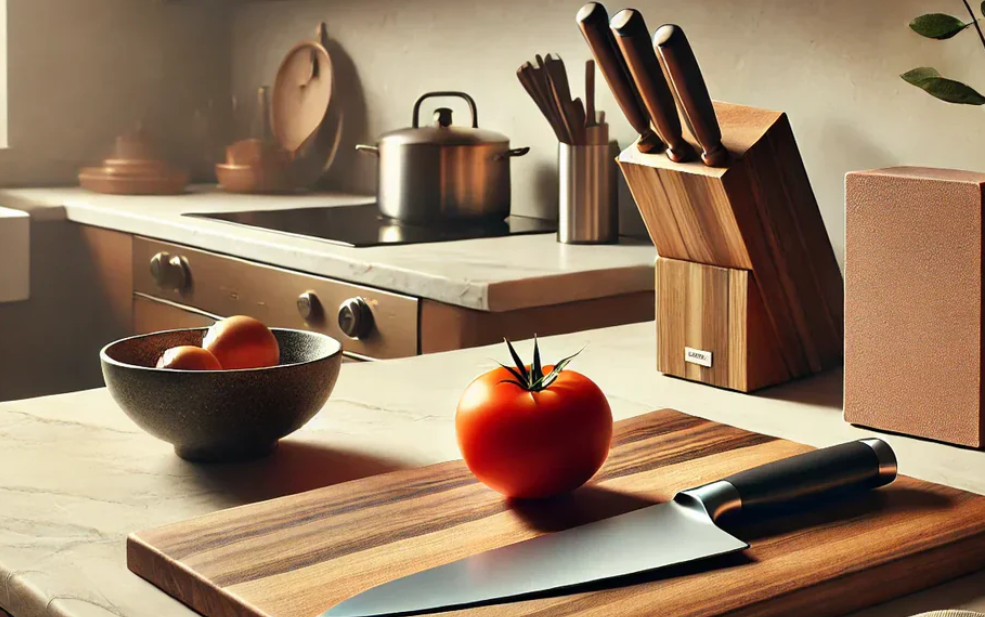
Sign #2: You Are Pushing Down Like You’re Lifting Weights
The Perils of Pushing Too Much
Here is a scary truth: when your knife gets dull, you unconsciously start pushing harder to get the same cut. And this is precisely when most kitchen accidents occur. The additional pressure you exert can make the blade skid quickly, and that’s when you wind up cutting yourself instead of your food.
A sharp knife does the work for you. The edge of the blade is razor-thin with hardly any resistance when cutting, making it flexible and an excellent tool. You’ll want to feel like you’re steering the knife, not wrestling it through food.
Your Hand and Arm Will Tell You
Consider what your hand and arm feel like after cooking. Your blade is dull if you feel soreness, fatigue or strain in your cutting hand. Cooking isn’t exercise. If you’re having to use so much pressure that you crush onions, carrots, or meat, something is definitely not right.
| Sharp Knife | Dull Knife |
|---|---|
| Cuts with ease | Needs to be forced through |
| No hand fatigue | Arm and hand soreness |
| More control | Butchers and tears |
| Safe cutting | Dangerous slipping |
Sign #3: Your Edges are Jagged and Ragged
The Distinction Between Cutting and Tearing
As any knife dulls, it refuses to cut and begins tearing. Check the food you just cut. Do the edges appear clean and smooth, or do they look ragged and uneven? Torn cuts are the surest sign your knife is dull.
Fresh herbs are particularly prone to this issue. A sharp knife cuts through basil or cilantro leaves cleanly, with bright green edges. A dull knife smashes and bruises the leaves, the edges turning brown and looking ragged.
The Impact of Dull Knives on Food Quality
How you cut your food can change how you taste and see it. If your knife is more apt to tear than cut, it damages cell walls in fruits and vegetables. That causes them to lose moisture more quickly and brown sooner.
In the case of meat, a dull blade tears through muscle fiber as opposed to making clean cuts. This can make the meat look less attractive, and may also alter its texture in the pan. Chefs understand that knives aren’t just tools of the trade, but a reflection of the chef.
Sign #4: You Can No Longer Do the Paper Test
A Simple Test Anyone Can Do
Ready to know once and for all if your knife is sharp? Try the paper test. Pick a piece of regular printer paper up by one edge and dangle it. Your knife should glide through the paper from top to bottom in a single smooth motion.
A sharp knife slices through the paper with a satisfying shearing sound. The cut edge will be smooth and straight. A sharp knife should be able to slice through a piece of paper with no effort; if it can’t, then your blade has become dull.
Why the Paper Test Works
This test is effective because paper is thin and offers a little resistance. It indicates whether your blade is sharp to a very fine point. If a knife fails the paper test, its edge has rolled over or developed microscopic chips.
You don’t need costly gear or expertise. Just pick up a piece of paper and learn the truth about your blade in seconds. This test is particularly practical when you want to verify whether your knife sharpening was thorough enough.
Sign #5: Onions are Making You Cry More Than Normal
The Science Behind Onion Tears
We all know onions make you cry. But did you know that with a dull knife, the tears will be unstoppable? As it turns out, when you chop an onion, you are breaking open its cells and releasing compounds that will irritate your eyes. A sharp blade ensures smooth cuts with less cell damage. A dull knife? It squashes way more cells than needed.
Onions are a pain to chop when your knife is in need of sharpening. You’ll find yourself tearing up much more often than you normally do, even though you’re working all the angles to keep it at bay. That extra cell damage will release more of those irritating compounds into the air.
Beyond the Tears: Flavor Impact
How you slice your onions affects more than just your tear ducts. That’s because crushing the cells of the onion with a dull blade forces out even more of those sulfur compounds, which can make your dish taste more bitter and onion-y than you wanted it to. This is particularly apparent in raw preparations, such as salads or salsas.
Benefits of a fully-sharpened blade:
- Less cellular damage
- Less crying while you cook
- Better taste in your final product
- Cleaner-looking onion pieces
- Faster preparation time
What You Lose By Not Paying Attention to These Signs
Safety Risks You Can’t Afford
A dull knife is actually more dangerous than a sharp one. This may sound perverse, but it’s not. When you have to force anything, you are not in control. The knife is more apt to slip off what you are cutting and into your hand or finger.
Emergency rooms see more accidents related to dull knives than sharp ones. Doctors refer to this as the “dull knife paradox.” Sharper knives seem to be scarier, but the numbers tell a different tale.
Time and Money Wasted
Just consider how much a dull knife will slow a cook down: dicing onions and carrots with a dull knife takes forever. Those additional minutes add up over weeks and months. You may be more likely to toss food, too, because dull blades tear into ingredients, causing them to spoil more rapidly.
Plus, when it really is time to fix an edge, a blade that’s been ignored too long could require professional care — more than regular maintenance sharpening. Being responsible for your knife the first time you see these signs of damage means saving cash in the long run.
How Often Should You Sharpen?
Home Cook Guidelines
For the home cook, knives should be sharpened properly every 3 to 6 months if you cook regularly at home. If you rarely cook, once or twice a year could be sufficient. However, you want to hone before every use to keep the edge between sharpenings.
Honing vs Sharpening: Many get confused between honing and sharpening. Honing does not remove metal; it realigns the edge. What you are doing when you sharpen is grinding away material to create a new edge. Both are necessary, but their fundamental purposes differ.
Professional Kitchen Standards
In the world of professional kitchens, chefs sharpen their knives far more often — perhaps even weekly or daily for their most-used blades. They know that knife maintenance is a cornerstone of their trade, not an occasional chore.
You don’t have to perform to professional standards in your home kitchen, but you can take a tip or two from them. Instead, observe when your knife stops cutting the way it’s supposed to — not based on a schedule.
According to America’s Test Kitchen, proper frequency of sharpening your knife actually depends on your usage habits: how often you use the knife, for what purpose and in which environment.
Quick Fixes vs. Proper Sharpening
What Honing Steels Actually Do
A lot of folks pick up a honing steel and believe that they are sharpening their edge. Honing steels (the long rods that come with knife sets) are maintenance tools. They remove the little kinks in your blade’s edge created during normal use.
Honing is like brushing your teeth — it’s regular maintenance. Sharpening is the dentist visit — deep work you do less frequently. You need both to be at your most productive.
When to Visit a Professional
If you have never sharpened a knife and it’s gotten very dull, consider bringing it to a professional the first time. They can restore the correct angle and edge, and you can keep it up from there. Professional sharpening generally runs about $5-10 per knife and typically takes a few days.
For expensive or specialty knives, professional service can be the safer bet. They know how to treat nice blades without ruining them.
Conclusion: Don’t Wait Until It’s Too Late!
Here are five warning signs that your knife needs sharpening. From flunking the tomato test to bringing you to tears chopping onions, these signs are your blade’s way of begging for assistance. To ignore them does so only at the cost of frustration, wasted time or even injury.
Keep in mind that a sharp knife is a safe knife. It makes the act of cooking more fun, your food look better — and it saves you time in the kitchen. Spend those couple of minutes to maintain your blade and it pays off every time you cook.
Check your knives today. Run them through the tests that we have discussed. If they can’t pass a single one, it’s time to act. Whether you want to sharpen them yourself, or bring them in for someone else to do, your time in the kitchen will be a million times better.
No longer struggle through another meal with a dull blade. Your hands, your food, and your peace of mind will thank you!
Frequently Asked Questions
Q: Can I sharpen too often?
A: Yes, but it is unlikely if you learn to sharpen correctly. Over sharpening is only an issue if you’re taking off way too much metal repeatedly. There shouldn’t be a problem if you follow normal sharpening timelines (which would be every few months for home cooks).
Q: Is a store-bought knife sharpener sufficient?
A: It depends on the type. Pull-through sharpeners are easy, but hard on blades and give you no control over angle. Whetstones are higher maintenance but more effective. Electric sharpeners are somewhere in the middle.
Q: How can I check that my knife is sharp after sharpening?
A: Do the paper test I explained earlier. A good sharp blade should be able to cut through paper with little to no effort. Alternatively, you can test it on a tomato: The blade should slip through the skin with little to no pressure.
Q: Does a $300 knife hold its edge longer?
A: Typically, yes, but it depends on the quality of steel and how you use it. Better steel will keep an edge longer, but even high-end knives require regular maintenance. The way you use and store the knife is more important than its price.
Q: Can I mess up my knife using a honing steel improperly?
A: You can’t really mess it up, but sloppy technique won’t do anything for edge retention. Keep the steel vertically, 15-20 degree angle with light pressure. There is no shortage of instructional videos online demonstrating proper technique.
Q: What is the difference between Western sharpening angle and Japanese?
A: Western knives typically have a 20 degree bevel on each side, while Japanese knives tend to have a sharper 15 degree edge. Japanese knives are typically thinner and harder, which makes for keener edges but also demands more careful upkeep.
Q: Do I need to wash my knife after sharpening?
A: Absolutely. Sharpening produces metal particles and debris you don’t want in your food. Clean the blade of your knife with soap and water, and make sure it’s completely dry before you handle or store it.