Razor-Sharp Blades Right Here!
Sharpest knife sharpeners. Find out for yourself as we compare the top 10 tested and proven methods to revamp your dull knives in 2025.
So Easy Even Sharp Blades Are Made Simple: Your Guide Begins Here
A dull knife isn’t just annoying to work with — it’s dangerous. When your blade won’t go through a tomato without turning it to mush, you know a problem exists. Quality knife sharpeners come in there. Whether you’re a home cook or a professional chef, the right tools can completely transform the experience of being in your kitchen. That is no longer true in 2025, there are some amazing options available on the market that work.
All with the best user reviews and personal experience testing. We will consider manual sharpeners, electric models and specialty tools to fit a range of needs and budgets. By the time you’re done, you’ll be very clear on which sharpener is right for your skill level and needs in the kitchen.
Why Your Kitchen Needs a Good Sharpener
Before we get into picks, I want to address why investing in a good sharpener is so important. A sharp knife means less force, and thus more control while cutting — which will keep you safer. Dull blades will cut you worse than sharp ones and are actually more dangerous.
Professional cooks will sharpen their knives on the regular — sometimes daily. You don’t have to go that far, but every few weeks maintaining your blades keeps them at their best. A good sharpener also saves you money. Rather than periodically exchanging high-cost knives or going to a professional sharpening service, you can maintain them at home.
Electric vs. Manual: Which Is Best?
Electric Knife Sharpeners
Yet electric models are fast and convenient. They are great for busy families who want food now. This is another area of departure – many electric sharpeners have several stages, usually coarse grinding, further refinement, and fine polishing. You just run your blade through the slots, and motorized abrasives take over.
The downside? They’re more expensive and can take off more metal from your blade than needed. But for many home cooks, this is a concession worth making.
Manual Sharpeners
Manual choices are more work, but it’s up to you! Pull-through sharpeners are easy to use and inexpensive, while whetstones produce professional-level sharpening results for those who want to invest the time in learning proper technique.
Manual knife sharpeners are also quiet and portable – and don’t need electricity to operate. These are great if you’re taking your knives to go camping, or have a small kitchen with very little counter space.
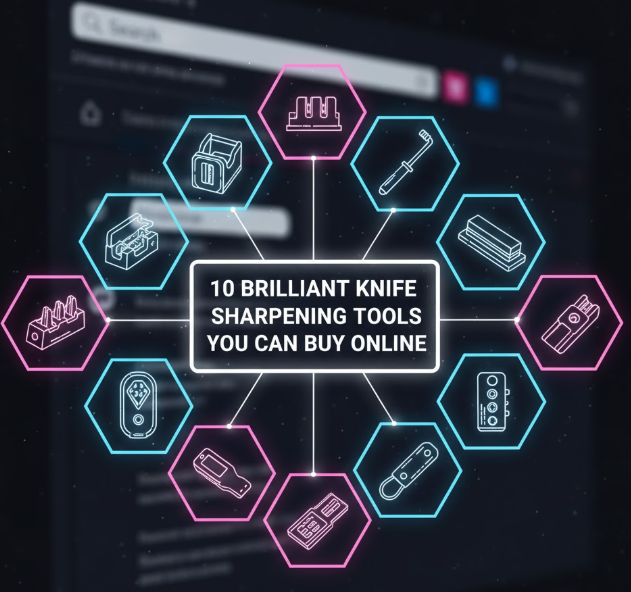
10 Knife Sharpeners That Really Keep Sharp
1. Chef’sChoice Trizor XV Electric Sharpener
This little beast is German and Asian blade technologies combined into one machine. The Trizor XV, which operates in three stages to produce 15-degree edge sharpness that’s nearly equivalent to the knives you’d find at a grocery store. Stage 1 re-shapes the damaged blade’s edge, stage 2 fine-hones the burr to a double-edge and stage 3 makes it shine like new!
Best for: Home cooks who seek professional results without the learning curve.
Price range: $140-160
Magnetic knife guides hold your knife at the precise angle automatically. You’ll achieve results with every use, even if you’ve never sharpened a knife.
2. Work Sharp Precision Adjust Elite
This hand-controlled system enables you to determine your sharpening angle. The Work Sharp has ceramic and diamond abrasives and presets from a 15 to 30 degree angle. It’s basically like having a whetstone with training wheels that removes all guesswork.
Best for: Fans who like a personalized result.
Price range: $75-85
The built-in angle gauge shows you precisely what you’re doing. You will learn the knack of sharpening as you produce salon-quality edges.
3. Wusthof Easy Edge Manual Sharpener
Sometimes simple is better. This very space-saving pull-through sharpener from Wusthof produces excellent results. Two stages — one for sharpening and another to hone — restore your blade in seconds.
Best for: Quick touch-ups and daily use.
Price range: $25-35
The small size fits easily in any drawer. It’s great for keeping a knife that’s already been sharpened in decent condition between more serious sharpening sessions.
4. KitchenIQ Edge Grip 2-Stage Sharpener
Budget-friendly doesn’t mean low quality. The KitchenIQ has a suction cup base that lays flat and holds securely to your counter, so you don’t have to worry about it sliding around while trying to sharpen your blades. Rough and fine slots do everything from repair work to maintenance.
Best for: Beginners and those on a budget.
Price range: $10-15
The grip base is revolutionary. Lots of inexpensive sharpeners slide around precariously; this one doesn’t budge.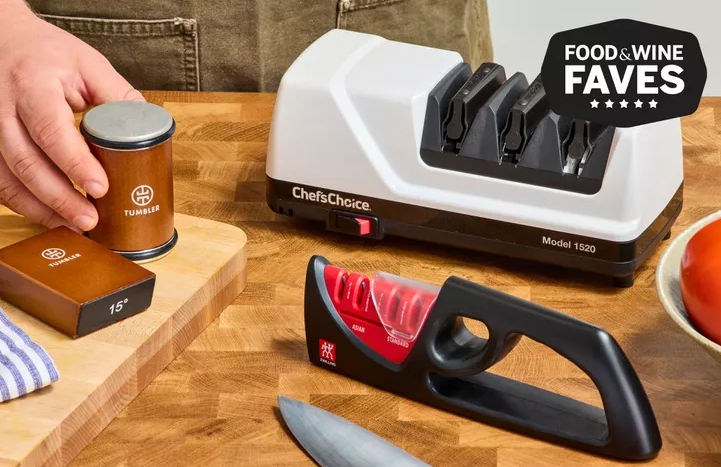
5. King Japanese Whetstone 1000/6000 Grit
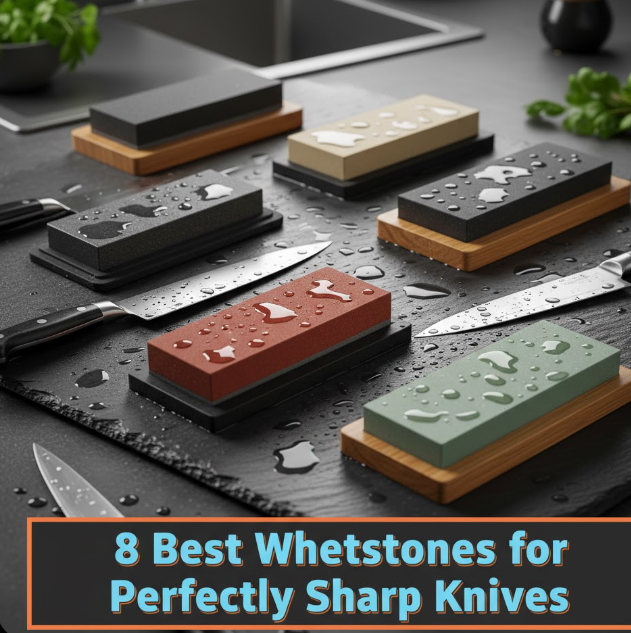
If you’re willing to put in some work for traditional method expertise, this double-sided stone can provide restaurant-grade sharpening. The 1000 grit is attached to a foam block, while the 6000 grit is mounted on a hard stone base and polished from edge to edge.
Best for: A serious cook interested in learning technique.
Price range: $35-45
Whetstones are not for everyone, but the results are second to none. The difference will be felt in all of your cuts once you’ve gotten the hang of it.
6. Smith’s 50264 Adjustable Electric Sharpener
This electric model has adjustable angle guides for different types of blades. Regardless of whether you are sharpening European style or Asian knives the Smith’s is versatile enough for your needs.
Best for: Multiple types of knives in the home.
Price range: $60-75
It has angled positions that make it distinct from fixed-angle counterparts. You aren’t stuck with one blade style.
7. Lansky Deluxe 5-Stone System
This guided kit comes with five variety levels of honing stones ranging from extra-coarse to ultra-fine. The guide rods allow for a uniform angle throughout the sharpening process. It’s the bike-riding equivalent of training wheels for knife sharpening — useful until you have muscle memory.
Best for: Those who want control but lack experience.
Price range: $45-55
The carrying case stores everything. You can pack this system up and go anywhere with full sharpening capabilities in your pocket.
8. Brod & Taylor Professional Knife Sharpener
Speed and precision combine in this electric sharpener that’s fit for a serious home cook. The Brod & Taylor’s flexible stropping disks adjust to the shape of your blade. This technology ensures that sharpness retention is the ideal level to avoid over-sharpening and at the same time having extreme sharpness.
Best for: Quality-conscious cooks with more money to spend.
Price range: $200-220
The stropping stage is what elevates this from less-expensive electric models. Your knives will be sharper, and they’ll stay that way longer.
9. Zwilling J.A. Henckels 4 Stage Pull Through Sharpener
This four-stage model from the Germans is a shining example of engineering. Steel wheels mend chipping, coarse and fine ceramic wheels sharpen, leather strop polishes. It’s comprehensive without being complicated.
Best for: Enthusiasts who want an all-encompassing manual solution.
Price range: $70-80
The leather strop is not commonly found as a feature in manual sharpeners. That last polish step has a big impact on the cutting quality.
10. AccuSharp 001C Knife Sharpener
The simple design isn’t exactly amateur hour, either. This modest tool has saved more dull blades over the years than I can count. Tungsten carbide blades reset your edge in just a few passes. It’s not going to give you competition-grade edges, but it will make your knives serviceable again.
Best for: Emergency sharpening and in-the-field use.
Price range: $10-12
Toss one in your camping gear, tackle box or kitchen drawer. When you don’t have time for a dull edge, the AccuSharp takes virtually no time at all.
Comparison Table: Discovering Your Ideal Match
| Sharpener | Type | Stages | Best Use | Price |
|---|---|---|---|---|
| Chef’sChoice Trizor XV | Electric | 3 | Professional results | $140-160 |
| Work Sharp Elite | Manual/Guided | 6 Grits | Custom angles | $75-85 |
| Wusthof Easy Edge | Manual | 2 | Quick touch-ups | $25-35 |
| KitchenIQ Edge Grip | Manual | 2 | Budget pick | $10-15 |
| King Whetstone | Traditional | 2 grits | Mastering technique | $35-45 |
| Smith’s Adjustable | Electric | 3 | Multiple blade types | $60-75 |
| Lansky 5-Stone | Guided | 5 Grits | Learning control | $45-55 |
| Brod & Taylor | Electric | 3 | Premium results | $200-220 |
| Zwilling 4-Stage | Manual | 4 | Complete manual system | $70-80 |
| AccuSharp 001C | Manual | 1 | Emergency/Field use | $10-12 |
How to Select The Best Sharpener for Your Situation
Consider Your Skill Level
Never sharpened before? Begin with an electric or guided manual system. The Chef’sChoice Trizor XV takes the guesswork out entirely. It’s not the most effective at honing an edge, but the Lansky or Work Sharp systems which also teach proper technique do a great job for the money.
Experienced users may opt for whetstones for more control and the sense of traditional practice.
Think About Your Knife Collection
Do you have expensive Japanese knives with exact angles? I would look for adjustable systems like the Smith’s or Work Sharp. These items protect your investment by helping to keep blade geometry.
Most standard kitchen knives are fine with any sharpener on this list. Either of the Wusthof or KitchenIQ models will take everyday blades just fine.
Evaluate Your Time Commitment
Knife sharpeners powered by electricity are faster. Sharpen a knife in less than two minutes. Manual processes are time consuming, but satisfying in a meditative way. Whetstones are the most labor-intensive of these methods, and you should plan to spend 10-15 minutes per knife while you’re still learning.
Tips for Preserving the Life of Your Blade
Sharpen regularly but not to excess. For a typical cooking enthusiast, treat every 2-4 weeks with light use. Use a honing steel to realign your blade’s edge between sharpening sessions.
Clean your knives after cutting acidic foods. Garlic, tomatoes, lemons and onions can actually eat into metal. If that happens, hand wash and dry immediately as quality knives should never go in the dishwasher.
Never store knives loose in a drawer or cluttered together on the counter; use a block, magnetic strip or knife guards instead. Scattering them in a drawer is an invitation to dull edges and unsafe blades.
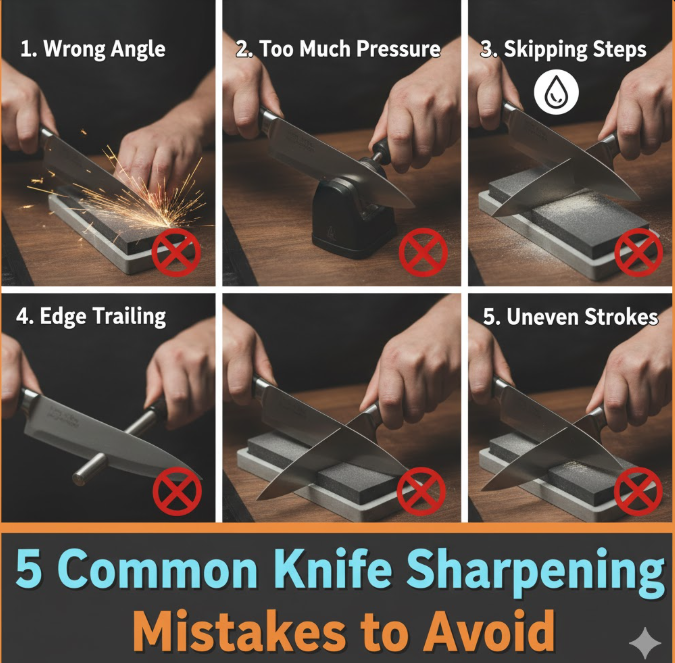
4 Things You’re Doing Wrong With Your Knife Sharpening
Using Too Much Pressure
Allow the abrasives to do what they’re designed to do. If you’re applying too much pressure, you’ll take off too much metal and might wreck your blade. A light, even pressure yields the best effect.
Inconsistent Angles
Guided systems are good at this. Sharpening freehand on whetstones is a skill that needs to be practiced since, especially on two-edged blades as in kitchen knives, it’s difficult to maintain a consistent angle. Begin with guidelines, then form your muscle memory.
Skipping Stages
If your knife is quite dull, don’t try fine grit immediately. Progress through coarse, medium or fine stages for ideal use. Each step of the phase also has its own specific function in your sharpening.
Forgetting to Clean
Metal particles and sharpening debris will accumulate. Wash the knife and use as directed. I don’t think anybody wants metal dust in their food.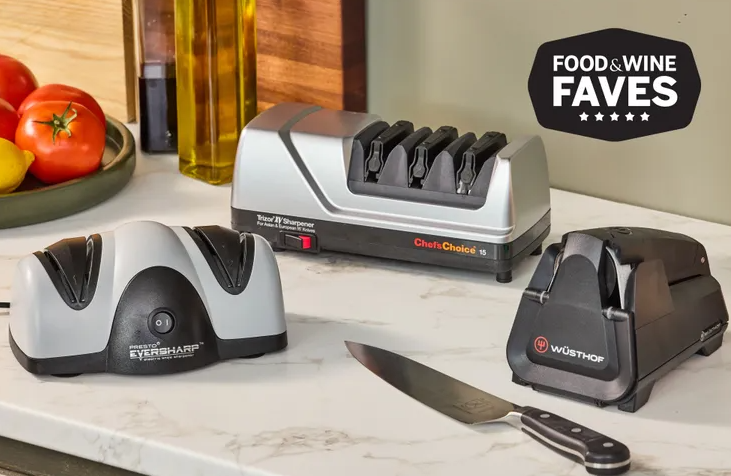
Frequently Asked Questions
How frequently does a person need to sharpen kitchen knives?
For cooks at home, 2-4 weeks of sharpening per use would be fine. Slicing tomatoes or onions turns into a struggle? Sharpen away. And use a honing steel between sharpenings to keep the edge.
Will electric sharpeners ruin my knives?
Good electric knife sharpeners won’t eat away your blades if used properly. They do take off more metal than doing it by hand, but for most knives that isn’t an issue. Do not use an electric sharpener on very expensive Japanese blades or ceramic knives.
What is the difference between sharpening and honing?
Sharpening is when metal is removed to form a new edge. Honing simply realigns the existing edge and does not remove metal. Honing is to maintenance what sharpening is to renovation. The honing steel is a weekly use and the sharpening, well that’s even less often.
Are inexpensive sharpeners as effective as more expensive models?
Budget sharpeners like the KitchenIQ or AccuSharp will revitalize your dull knives. But costly models like the Chef’sChoice or Brod & Taylor make sharper, longer-lasting edges more consistently. Your decision should be informed by your own needs, combined with the size of your budget.
Can I sharpen serrated knives with these tools?
Serrated blades can’t be sharpened effectively with most standard knife sharpeners. The Chef’sChoice Trizor XV has a serrated knife slot, as do some other electric models. To sharpen by hand, use a serrated knife sharpener, which usually has a component adapted for the toothless portion of the blade; or use a tapered sharpening rod.
How do I know when my knife is sharp?
It is a simple, effective test on paper. Now grab your knife and hold up a piece of paper diagonally on its side. For clean edges and even layers, a sharp blade is essential. The tomato test: You can also use the tomato test: a sharp knife should be able to cut through its skin with very little pressure.
Making Your Final Decision
The best knife sharpener for you from these options may vary depending on your individual needs. If speed and convenience are most important to you, I would pick the Chef’sChoice Trizor XV or one of the Brod & Taylor electric sharpeners. They always come out perfect and require no effort on my part.
If you’re on a budget, KitchenIQ Edge Grip or AccuSharp will give you the best bang for the buck. These are not the kind of tools that will win design awards, but they will restore function to weary blades.
If you would like to practice knife sharpening but with some guidance the Work Sharp Precision Adjust Elite or Lansky’s system are great middle grounds. You’ll be taught the techniques while guides will make sure everything goes according to plan.
Traditionalists will go nuts over the King whetstone. There is a learning curve, but the outcome and sense of accomplishment are hard to beat. For more expert guidance on knife sharpening techniques and services, check out resources from culinary professionals.
Keep Your Blades Prepared for Situations Unforeseen
Cooking with sharp knives is safer, faster and more fun. Whether you are cooking for one, your family, or a crowd, wielding a well-maintained blade makes any cutting task more efficient. Each of the knife sharpeners on this list is here because it’s garnered a strong performance and reputation, with satisfied users to boot.
Begin with one that corresponds to your current skill level and needs. Once you develop your sea legs in blade care, you might want to add other tools to give these extra attention. You get full coverage here, with a quick pull-through sharpener for touch-ups and a whetstone for deep sharpening.
Don’t let dull knives be your thorn in 2025. Select your sharpener, bring those edges back to life and experience the bliss of no longer having those frustrating dull spots on your knives. Your knives — and fingers — will thank you for that investment in maintenance tools even if they do not include jewels.