
Introduction
Having a dull knife is not only annoying, but can also be dangerous. Put simply, when your blade loses its edge, you are exerting more force to cut whatever it is you’re cutting and this raises the danger of an accident occurring. Which is why if you spend any amount of time in the kitchen it’s essential to keep your knives sharp.
One of the major questions people ask regarding sharpening is how to rank whetstone vs manual sharpener. Both are capable of giving an edge like new again, but in very different ways. Whetstones have been one of the most powerful tools in existence for thousands of years, they offer unparalleled control. Modern manual sharpeners are fast and super easy to use.
So which one should you pick? It depends on what you want, how much time you have and how concerned with it being the best sharpening job out there. In this guide, we’ll demystify both options and help you decide which is best for your kitchen.
What Is a Whetstone?
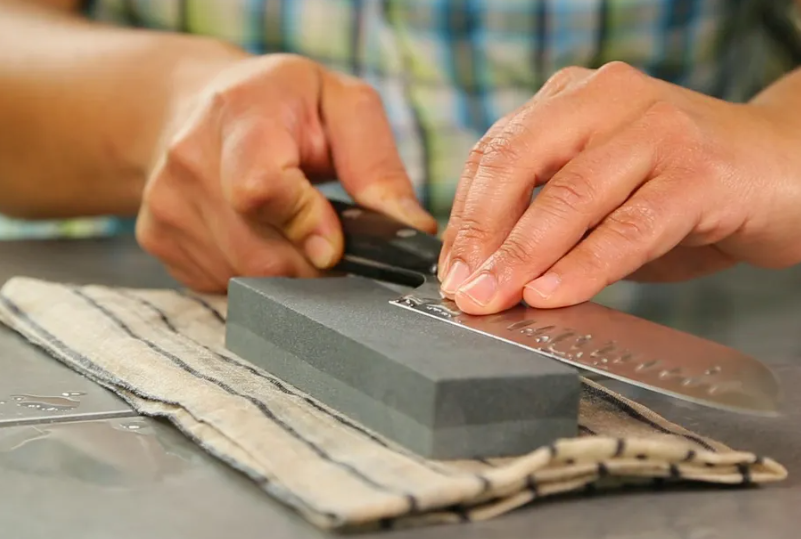
A whetstone (also known as a sharpening stone) is a flat block of material, used for sharpening a knife or other tools. You use it by running a knife blade over its surface at a special angle. The stone is wet with either water or oil to prevent the blade from overheating and as a lubricant for the abrasive surface, also keeping them clean while in use.
Whetstones are available in various grits. Coarser grits (such as 400-1000) are very rough and can be used for fixing damaged edges. Higher grits (3000-8000) will polish and refine the blade to a mirror finish.
How Whetstones Work
Sharpening with the whetstone comprises of sliding the knife back and forth on it. You keep the blade at the same angle generally 15 to 20 degrees. The stone whittles tiny amounts of metal from the blade to create a new, sharp edge.
This method takes practice. You should keep the right angle of contact and apply equal pressure. But they also provide for total control over the sharpness of your knife, once you get the hang.
Types of Whetstones
There are several types available:
- Water stones: These are soaked in water before use and are most common in Japan
- Oil stones: Require oil for lubrication; more common in Western countries
- Diamond stones: Diamonds are embedded in the surface for faster cutting
- Ceramic: Super hard and dense, no water or oil required
There are pros and cons associated with each type, but all operate according to the same basic principle.
What Is a Manual Sharpener?
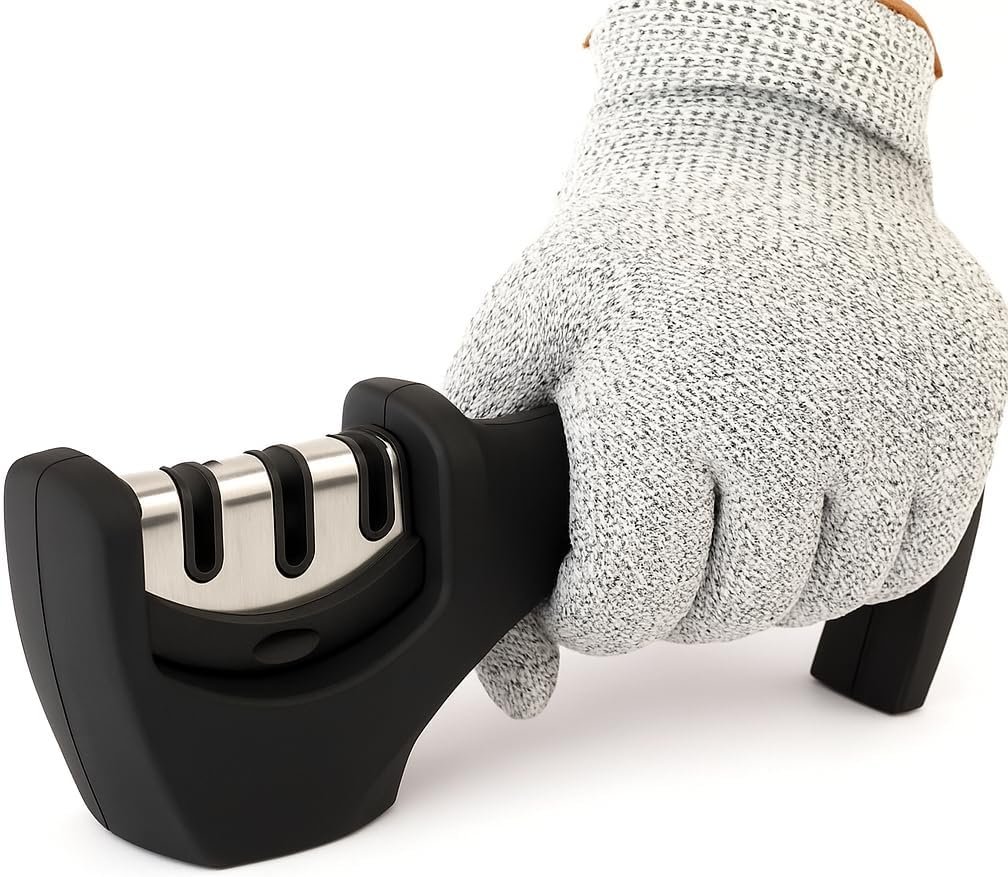
Manual sharpener is a compact tool that makes sharpening safe, easy and fool proof. Most have a slot or groove into which you drag your knife. Inside are abrasive materials of ceramic rods, tungsten carbide or diamond-coated wheels that sharpen the edge as it is drawn through.
Manual sharpeners, unlike whetstones, mean you don’t have to keep an angle of a certain slope. The tool does that for you. This makes them incredibly beginner-friendly.
How Manual Sharpeners Work
You just insert the knife in the slot and pull through from heel to tip. The pre-set angle guides optimal sharpening position whenever in use. Others feature two stages, one to repair the edge and a second to fine-tune it.
It is a matter of seconds from beginning to end. There’s no need to add water or oil, and there’s none of that setup at all. Just pick up the sharpener and start sharpening.
Types of Manual Sharpeners
Common varieties include:
- Pull-through sharpeners: A fixed angle grit simple slot design
- V shape rod sharpeners: It has two rods that form a V; you place the knife in between them
- Portable stick sharpeners: Easy to carry around and use outdoors
- Multi-stage sharpeners: Feature two different slots for coarse and fine sharpening
All designs differ in levels of sharpening quality and ease-of-use.
Manual Sharpener vs Whetstone: The Differences
An overview of the key differences helps you determine which one is most suitable for your needs. Here’s a detailed comparison.
| Feature | Whetstone | Manual Sharpener |
|---|---|---|
| Ease of Use | Takes practice and skill | Very easy, beginner-friendly |
| Time Required | 10-30 minutes per knife | 30 seconds to 2 minutes |
| Sharpness Level | Extremely sharp professional edge | Sharp enough for daily cooking |
| Control | Full control over angle and pressure | Preset angle, limited control |
| Durability | Lasts decades with proper care | May wear out in as little as one or two years |
| Price Range | £20-£200+ | £10-£50 |
| Portability | Bulky | Can be taken anywhere |
| Learning Curve | Steep – Must study the instructions | Almost none |
Following this table, clearly each has its pros and cons. Which set of features is most important to you will determine which one’s for you.
Advantages of Using a Whetstone
Serious cooks and knife aficionados know that whetstones are the gold standard for sharpening knives. Here’s why they are considered among the best.
Superior Sharpness
When you sharpen on a whetstone, you make an edge that is powerfully exact. You can get sharper than with a manual sharpener, simply. This can be particularly important for jobs that call for clean cuts, such as when slicing sashimi or filleting fish.
Complete Control
You choose the angle, amount of pressure and number of passes. This makes it perfect for your custom sharpening inclinations based on knives and cutting preferences. Need a 15-degree angle on your Japanese chef’s knife? No problem. Prefer a sturdier 20-degree edge for your Western blade? You’ve got it.
Long-Term Value
And they can serve for a lifetime. Unlike hand-held sharpeners that wear away, stones occasionally require flattening. This makes them especially cost-effective in the long run.
Better for Expensive Knives
If you’ve shelled out for a high-end set of Japanese knives or chef’s knives then it had better be a whetstone. It takes off very little metal and it’s gentle on the blade. Manual sharpeners are also aggressive, which can ruin premium steel.
Therapeutic Process
Sharpening on a whetstone is also relaxing for many. It’s a meditation, a practice that requires concentration and patience. The sound of metal on stone, and the dull edge slowly getting better can be that satisfying.
Benefits When Using a Manual Sharpener
Manual sharpeners can provide busy home cooks a convenient way to keep their knives sharp without too much hassle. Here’s what makes them appealing.
Lightning Fast
You can sharpen a knife in less than one minute. Perfect if you are knee-deep in cooking and realize your blade is dull. No prep, no wait — just rapid results.
No Learning Required
Anyone can use a manual sharpener right away. There is no move to learn or angle to remember. That makes it perfect for people who simply want their knives to work, without becoming sharpening specialists.
Consistent Results
The preset angle guarantees consistency. Even if you don’t know how to sharpen a knife, you’ll get good results every time. This reliability is useful for beginners.
Compact Design
The average manual sharpener gets tucked in a drawer, or hung on a hook. They don’t take up much room, and are ideal for small kitchens or apartments.
Affordable Entry Point
You can get a good manual sharpener for less than $25. This affordability is appealing for those looking to get started in maintaining their knives without a heavy investment.
Great for Multiple Knives
When you have heaps of knives and probably will be sharpening them again at a regular routine, then a manual sharpener surely will save you loads of time. You can do your entire knife block in just a few minutes.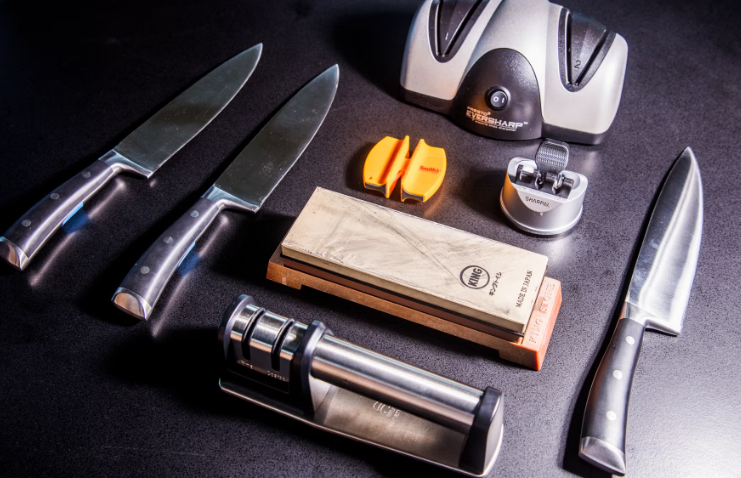
Drawbacks of Whetstones
Whetstones, though great, aren’t ideal for everyone. Here are the main downsides.
Steep Learning Curve
It takes a while to get good at whetstone sharpening. You will likely screw up a few times before you hit the mark. This frustration alienates people sometimes.
Time-Consuming
Setting the stone, soaking it and leisurely sharpening each knife requires lots of time. This can be a lot of work when you’re in a hurry.
Physical Effort
You would need to apply that pressure and try to keep the right angle for 15-20 minutes, which is difficult. It is all about concentration and steady hands at every single stage.
Messy Process
Water stones produce a slurry (a muddy mix of loose abrasive particles and water) that can splatter. You are going to need some table space and you might also be required to clean up afterwards. Not great if you’re looking for a fast touch-up.
Storage Considerations
Proper storage helps to protect your whetstone from harm. They aren’t something that can just be chucked into a drawer with the other tools.
Drawbacks of Manual Sharpeners
Then there are the limitations of manual sharpeners. Here’s what you should know.
Limited Sharpness
They won’t produce the ultra-sharp edge that whetstones will. For razor-sharpness, they don’t cut it.
Fixed Angles Only
You’re unable to adjust the angle of the sharpening. This also means that you’re saddled with whatever the manufacturer picked when they created the knife – which isn’t necessarily going to be perfect for all types of knives.
Removes More Metal
Most manual sharpeners that you find gouge away your steel, often more than is actually needed. This tends to shorten the lifespan of your knife.
Not for All Blade Types
Some manual sharpeners are not designed to accommodate single-bevel Japanese knives, serrated edges or certain blade shapes. They are intended primarily for the standard double-bevel knives found in most kitchens.
Shorter Lifespan
The abrasive surfaces of manual sharpeners lose their bite. You will need to replace them every few years, increasing the long-term expense.
Lower Quality Edge
The edge produced by a manual sharpener is usually not as refined or durable as the one from a whetstone. You will lose sharpness fairly quickly, and it will certainly require sharpening more often.
Which One Should You Choose?
Then comes the big question: whetstone vs manual sharpener which is best for you? The bottom line is it depends.
Choose a Whetstone If You:
- Have high-quality or expensive knives
- Love to learn new knots/skills/techniques!
- Want the sharpest possible edge
- Maintenance time is not an issue
- Cook frequently and appreciate precision
- Have space for proper storage
- Value quality tools and believe in investing in them
Whetstones are great for knife aficionados, the serious home cook and those who regard cooking as a craft rather than just a chore.
Choose a Manual Sharpener If You:
- Need quick and easy sharpening
- Are new to sharpening and intimidated by the process
- Don’t have a lot of time to spend tending knives
- Want something affordable and simple
- Have a small kitchen and need to save space
- Sharpen knives occasionally, not regularly
- Use budget or mid-range knives
Manual sharpeners are good for most people, because they’re easy to use and friendly to your knives as long as you’re not using them every day.
The Best of Both Worlds
Some people use both tools. They touch up their knives with a manual sharpener and use a whetstone every few months for a full tune-up. It’s the just right mix of convenience and quality.
Tips for Using a Whetstone
If you settle on a whetstone, these guiding principles will orient you in the right direction.
Start with the Right Grit
I always recommend that beginners start with a dual sided stone (1000/6000 grit). The 1000 side does the work of sharpening, and the 6000 side polishes.
Soak It Properly
Water stones require soaking for 10-15 minutes prior to use. When bubbles cease to rise from the stone, it’s ready.
Find the Correct Angle
Place the knife at roughly a 15 to 20 degree angle to the stone. Good trick is: imagine the angle you select as two stacked coins under the spine of the blade.
Use Even Pressure
Apply mild and uniform downward force while advancing the blade. Too much pressure can ruin the edge or stone.
Sharpen Both Sides Equally
Stroke the same amount on both sides of the blade to keep it balanced and level.
Keep the Stone Flat
Whetstones become uneven with use. Then use a flattening stone over them to help keep them dead level for best results.
How to Use a Manual Sharpener
Manual sharpeners are straightforward, but these tricks will lead to better results.
Use Light Pressure
Don’t press down hard. Allow the sharpener to do its job. If you add too much pressure, the blade or sharpener can be damaged.
Pull Through Slowly
Take your time. Fast, jerky strokes don’t sharpen as well as slow, smooth pulls.
Start at the Heel
Start at the bottom of the knife (heel) and draw to the tip in one stroke.
Know Your Stages
If your sharpener has two stages, begin with the coarse stage for dull knives; finish with fine stage for polishing.
Clean After Use
After daily use: Wipe metal shavings away from the base and top of sharpener to avoid buildup.
Replace When Needed
If you find that your sharpener isn’t functioning properly, you are likely due for a new one.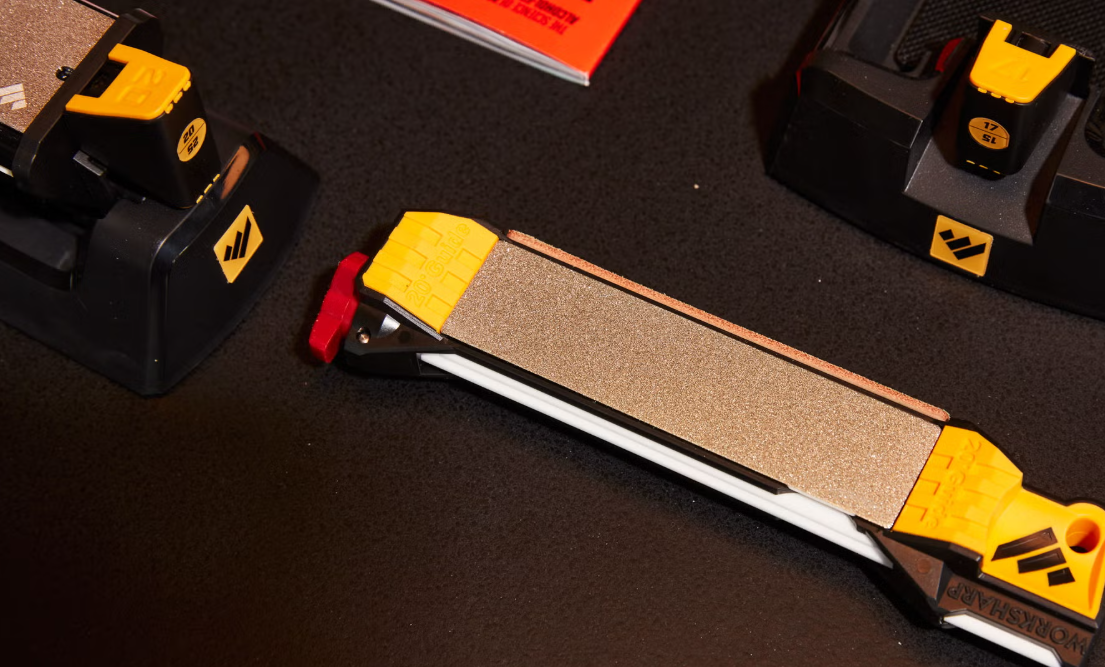
Maintaining Your Knives Between Sharpenings
Whether you use a whetstone or manual sharpener, proper upkeep will ensure your knives stay sharper longer. For professional knife sharpening services and maintenance tips, you can explore additional resources to keep your blades in top condition.
Use a Honing Steel
A honing steel (or rod) does not sharpen but rather realigns the edge. Use this weekly to keep your knife sharp between real sharpenings.
Choose the Right Cutting Board
Always use wood or plastic boards. Glass, marble and ceramic boards will quickly dull your knives.
Hand Wash Your Knives
Do not ever put knives in the dishwasher. The harsh detergents and bumping destroys the edge. Hand wash and promptly dry.
Store Properly
Store in a knife block, magnetic strip, or blade guards. Knives bouncing around loose in a drawer will bang into other stuff and get dull.
Cut with Proper Technique
Push and slice instead of straight down. This will never allow edge to become dull and the cutting procedure a lot easier.
Frequently Asked Questions
Can I use a whetstone on inexpensive knives?
Yes, a whetstone can be used on any knife. That said, the cheaper knives made of soft steel won’t hold an edge as long, so you have to sharpen them more often. The return you would get for your time investment may not be worth it, especially if you are dealing with low-quality blades.
How frequently do I need to sharpen my knives?
It depends on use. Home cooks can usually sharpen their knives every 2-3 months with a manual sharpener or every 6-12 months with a whetstone. Professional chefs sharpen weekly (or daily).
Will my expensive knives be ruined by a manual sharpener?
It really just depends on the quality of your sharpener. Some of the cheaper “pull-through” sharpeners have fixed carbide slots that are too aggressive. Better manual sharpeners with ceramic rods are more gentle, but still not ideal for premium Japanese knives.
Do I use different grits for different knives?
For general maintenance, I find that a 1000 grit whetstone is all most knives need. Lower grits (400-600) are for fixing chips or very dull edges. Higher grits (3000-8000) should be used to polish and get razor sharp edges.
Can beginners use whetstones successfully?
Yes, but be prepared to go through a learning curve. Follow tutorial videos, try on less expensive knives and give yourself time. Most people achieve good results after 3-5 practice sessions. For additional guidance, check out resources from the American Culinary Federation on proper knife care techniques.
What is the difference between sharpening and honing?
Sharpening is the removal of metal to form a new edge. Honing realigns a previously bent-out-of-shape edge. Honing is to maintenance as sharpening is to restoration.
Final Thoughts
It really depends on your priorities, it’s a question of whetstone vs manual sharpener. There is no one undisputed “best” choice — the best option for you will depend on your demographics, profile of risk appetite and comfort with complexity.
Whetstones are for anyone willing to devote time to mastering the skill, and they provide the kind of sharpness, control, and value that other devices just can’t compete with. They’re the professional’s choice and perfect for anyone with good knives who is passionate about the art of cooking.
Manual sharpeners offer speed and convenience, plus they’re simple enough for even a busy home cook to master. They’re ideal for everyday kitchen use and there’s absolutely no learning curve.
Think about your cooking habits, how many knives you own, the amount of time you have and interest in knife care. Be realistic about what you’re actually going to use. That whetstone that’s sitting unused in the cabinet isn’t doing anyone any favours, nor is a manual sharpener that delivers less-than-stellar results to the perfectionist.
Whatever you decide, the key is to simply sharpen your knives regularly. A sharp knife is a safer, faster, more enjoyable tool to cook with. How you get there whether with a whetstone or a manual sharpener matters far less than the getting there at all.
Start with one tool, understand how to use it and bring the satisfaction of sharpening knives properly back into your own kitchen.
