
Sharp Knives Begin With The Correct Stone
Not only is a dull knife frustrating, but it’s also dangerous. When you’re attempting to cut through a tomato and that knife slips off the skin, that’s when accidents happen. The best whetstones can turn your once-dull, lifeless knives into perfectly cutting precision instruments that slice through ingredients with ease.
The ideal sharpening stone doesn’t have to be hard to find. Whether you’re a home cook who needs your knives sharp come Sunday dinner or a professional chef who uses those razor-sharp edges on the daily, the right whetstone can make all the difference. In this guide, we’ll take you through eight excellent choices that offer professional quality while keeping your bank account intact.
What to Look for in a Whetstone
Before we get into our top picks, let’s discuss what distinguishes a great whetstone from a meh one. Knowing these things will narrow your focus towards the perfect whetstones for you.
Grits Matter More Than You Think
Grit is the roughness of the stone’s surface. It’s sort of like sandpaper — lower numbers create a coarser surface and remove more metal; higher numbers produce a smoother, polished edge.
Grit Level Guide:
| Grit Range | Purpose | Good for |
|---|---|---|
| 200-600 | Chips and damage | Extremely dull or damaged |
| 800-1500 | Sharpening | Regular maintenance |
| 2000-4000 | Refinement | Professional-level sharpness |
| 5000-8000+ | Mirror finish | Specialized blades and collectors |
What most home cooks will appreciate is a dual-sided stone, with both medium (1000 grit) and fine (3000-6000 grit) surfaces. This double-duty set simplifies everyday sharpening and finishing so you can use fewer stones.
Stone Material Changes Everything
Whetstones come in a variety of materials, each with its own advantages:
Water stones are old fashioned Japanese style stones that need water before sharpening. They’re fast-cutting and give great feedback, but wear out more quickly than other kinds.
Oil stones are harder and will last longer, but they’re messier since you need oil to lubricate them, and they cut less quickly.
Diamond stones are small, bonded pads of industrial-grade diamonds attached to a flat metal plate. They are super-durable, do not need to be soaked and cut very fast, but they tend to be more expensive upfront.
Ceramic stones offer a compromise in between those two extremes: they are harder than water stones yet softer than diamonds, so will require very little care.
Our 8 Top Picks for Sharp Success
1. King KW65 1000/6000 Grit Whetstone
For good reason, this classic Japanese whetstone has made a name for itself as a beginner favourite. The King perfected the combination of their 1000 and 6000 grit stones to take knives from dull to appropriately sharp in a matter of minutes.
The 1000-grit side is designed for regular maintenance, and also removes finer scratches. Turn it over, and the 6000-grit side brings your edge to a professional polish. Despite soaking for only 10-15 minutes, the stone delivers smooth and even sharpening.
Why it’s good: It’s cheap, it works well, and you have a plastic base to hold the stone in place while you work. Great for those learning the art of sharpening.
Look out for: It will wear down more quickly than harder stones, forming a shallow hollow with use. Just regular flattening will keep it working.
2. Sharp Pebble Premium Sharpening Stone Bundle
If you’re looking for everything in your kit, this is it: Sharp Pebble comes with an angle guide as well. This full kit comes with a dual-sided stone (1000/6000 grit), bamboo base, angle guide and flattening stone — everything but the knife itself.
The angle guide ensures beginners to maintain the angle of 15-20 degrees while sharpening. This easy tool makes the learning curve much less steep and saves you from making rookie mistakes, which might ruin your blade.
Why it’s good: This is the best whetstone for beginners, thanks to the included extras. The bamboo base looks handsome on your counter, as well.
Keep in mind: The stone is a little smaller than pro-grade stones, so you may have to refinish the surface more often for heavy use.
3. DMT DuoSharp Bench Stone
How about something that will last damn near forever? The industrial diamonds bonded to a flat aluminum base of the DMT DuoSharp make the blade sharpening process fast and easy. No soaking, no drying, no mess—just sharpness!
Comes in a variety of grit combinations, with the most common combo featuring a coarse (325 grit) and fine (1200 grit) side. This system can do everything from repairing damaged edges to routine maintenance sharpening.
Why it’s good: Insanely tough and fast cutting. Its use case is so simple that you can literally use it dry, or with water either way works perfectly. The flat never needs to be trued.
Be aware: The 1200 grit isn’t going to produce as polished an edge as 3000+ grit water stones. You will be sharp, just not some mirror-finish sharp.
4. Shapton Glass Stone HR
Japanese Shapton stones are the creme de la creme of water stone technology. These revolutionary stones are attached to glass plates, so they are extremely thin and strong.
The HR series removes material faster and with less cratering than traditional water stones. You just need to give them a quick splash of water before using—soak not required. The 1000-grit is perfect for general purpose sharpening.
Why we like it: Professional grade but lays flat and cuts evenly. It’s small enough to fit in any kitchen drawer. According to many chefs, these are the best whetstones money can buy.
Be aware: More expensive than basic water stones, and the glass backing can shatter if dropped. Handle with care.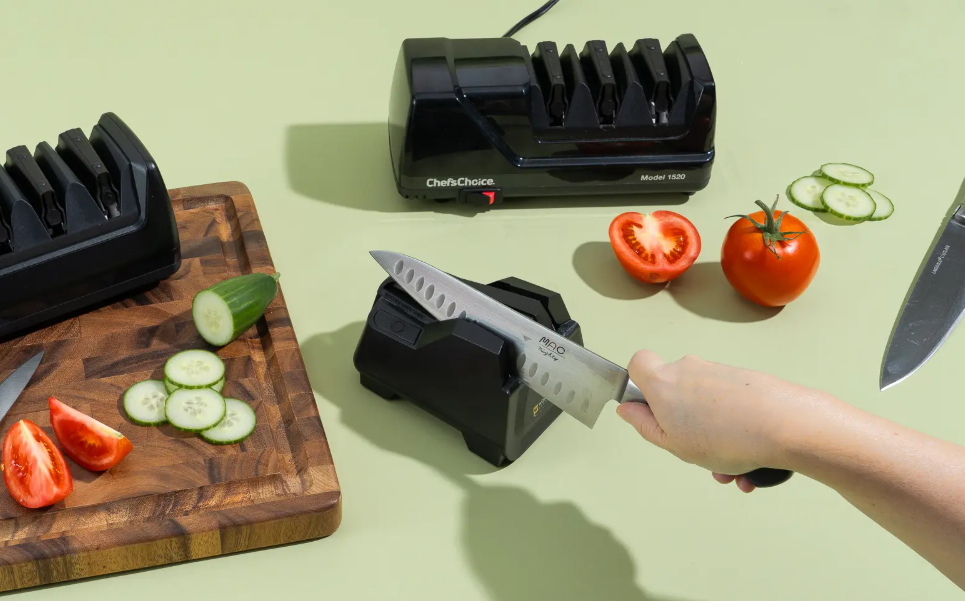
5. Lansky Dual Grit Sharpener (120/280 Grit)
There are times you require some real metal removal capability. The Lansky dual grit stone is designed for trying to repair dead knives or dull and damaged edges.
These are the rough grits, and they’ll work their way through nicks, bent tips, or wicked dullness in no time flat. After you’ve re-established the basic edge geometry, move to a finer stone for finishing.
Why it’s great: Super cheap and very useful for repair work. Oil-based sharpening equates to no water mess in your kitchen. The rough surface does the work on everything from kitchen knives to other tools.
Keep in mind: This is not a finishing stone. A finer grit will be required for finishing the sharpening and eliminating scratches from coarse grinding.
6. Bester 1200 Grit Water Stone
The Bester 1200 is the just-right option, if you’re a home cook who sharpens pretty often. This medium-grit stone does a great job getting rid of the scratches and nicks on your blades, covering all the damage from everyday use and it is durable enough that you won’t need to replace it all the time.
They are a bit harder than the traditional waterstones and that also gives them higher durability with good amount of feedback and cutting speed. The 1200 gets metal off fast and gives a nice, smooth surface.
Why it’s a great gift: Responsive performance that accommodates both European and Japanese knives. Soak it for 20 minutes and you’re good to go for regular sharpening.
What to watch out for: The harder texture will cut a little slower than softer stones. Be patient and let the necessary work be done by the stone.
7. Naniwa Super Stone (3000 Grit)
When you need that extra fine touch on your blade, these Naniwa Super Stones will not disappoint. The 3000-grit one gives you extremely smooth, sharp edges with no drag at all when slicing through something.
These are splash and go stones and only require a quick spritz down with water before use. Cutting action is smooth and precise so you can grind at further forward or back angles along the blade profile while still remaining stable on your stone.
Why it’s great: One of the better whetstones for polished finish edges. The medium bond is ideal for fast grinding and offers good durability. Chefs love the consistent feel.
Watch out for: It’s a finishing stone, not a heavy sharpener. Combine with a coarser stone for comprehensive edge work.
8. Arkansas Natural Novaculite Stone
For more than a century, these traditional American oil stones have been the best way to put a razor-sharp edge on hand tools and knives. Extracted from natural novaculite deposits, Arkansas stones are available in different grades ranging from soft (coarse) to translucent (ultra-fine).
The medium Arkansas stone gives a firm, all-purpose edge that is durable enough to last for years! The stone needs oil to keep it well-lubricated, but the payoff is a consistent surface that lasts forever and never has to be flattened.
Why it’s great: Virtually indestructible. This stone could get passed down to your grandchildren. With a bit of a slower cutting action, you get great control for your fine edge work.
Be aware of: Oil stones take a longer time and more patience than water stones. There’s a mess, for sure — keep dedicated rags on hand.
How to Select Your Ideal Stone
Choose the Stone for Your Knives
Different knives need different approaches. On a fine water stone, sharp Japanese knives made of hard steel (60+ HRC) will produce dreams. For these, European knives with lower hardness (55-58 HRC) perform great on medium-grit stones and you won’t have to polish them to death.
Consider Your Sharpening Frequency
Sharpen once a month? An occasional maintenance option would be a quality dual-sided stone. Sharpen weekly or professionally? Invest in several stones at various grits, or consider ultra-durable diamond stones that hold up to rigorous use.
Budget Reality Check
You don’t need the most expensive stone for sharp knives. One of the $30-50 combination stones that we recommend will provide excellent service to most home cooks. Keep those premium stones for when you’re an experienced pro and look to elevate sharpness to new heights.
Quick Sharpening Tips for Success
Optimizing the usefulness of your whetstone depends on more than just purchasing the right stone. Follow these essential tips:
Soak water stones properly. The majority require 10 to 20 minutes submerged before they’re ready for use. It is not good to speed it up, which will produce a shoddy cut.
Maintain your angle. It is the consistency more than the actual angle that counts. Choose an angle in the 15-20 degree range and keep it consistent across the blade.
Use the whole stone. Sharpening in a single location creates depressions. Spread across whole surface in order to stay flat longer.
Let the stone do the work. You should apply light to medium pressure. More pressure does not mean faster sharpening, just a duller stone more quickly.
Count your strokes. Give each side of the blade an equal number of runs. It keeps the edge centered and true.
Flatten regularly. Flatten your stone’s surface with a flattening stone or sandpaper on glass. Dished stones never give you a consistent sharpening.
For professional knife sharpening services and expert guidance, visit DTDF Knife Sharpening.
Taking Care of Your Investment
The best whetstones are great purchases — if not one-time investments — that can last for years to come. After using, wash your stone well to remove metal particles and dirt. Allow water stones to air dry completely before storing – trapped moisture can lead to cracking in temperature swaps.
Stones should be stored in a dry place out of direct sunlight. If you have more than one stone, mark them with grit so they don’t get muddled together. Simply wipe clean diamond stones with a wet cloth after use.
Never drop ceramic or glass-backed stones. The impact can cause a crack in the material that is no longer usable as its once perfect self. So too, do not mistreat them as you would a decent knife.
Common Questions Answered
How regularly should I be sharpening my knives?
Home cooks will usually hone once a week and sharpen every 2-3 months. In professional kitchens that have heavy use, you may need to sharpen every week or on a daily basis for knives.
Can I use one stone for all my knives?
All-purpose kitchen knives can be effectively sharpened with a 1000/6000 combination stone. Very dull blades may need a coarser stone first, and specialty knives with harder steel may benefit from finer grits.
Do whetstones wear out?
Yes, however well-made stones last for years. Water stones wear the fastest, oil the slowest, and diamond in-between depending on how often you use them.
Water or oil stones, which are better?
Water stones cut more quickly and are easier to clean, which is why they have become popular for kitchen knives. Oil stones are longer lasting and suitable for tools and outdoor knives. When used properly, both get sharp edges. For more information on different sharpening techniques, check out America’s Test Kitchen guide on knife sharpening.
What grit should beginners use to start?
Learning to use a 1000-grit stone is ideal. It’s aggressive enough to take metal off at a reasonably busy clip so you can see progress, but fine enough that you don’t need to move on to the next step unless it’s just for a matter of perfection.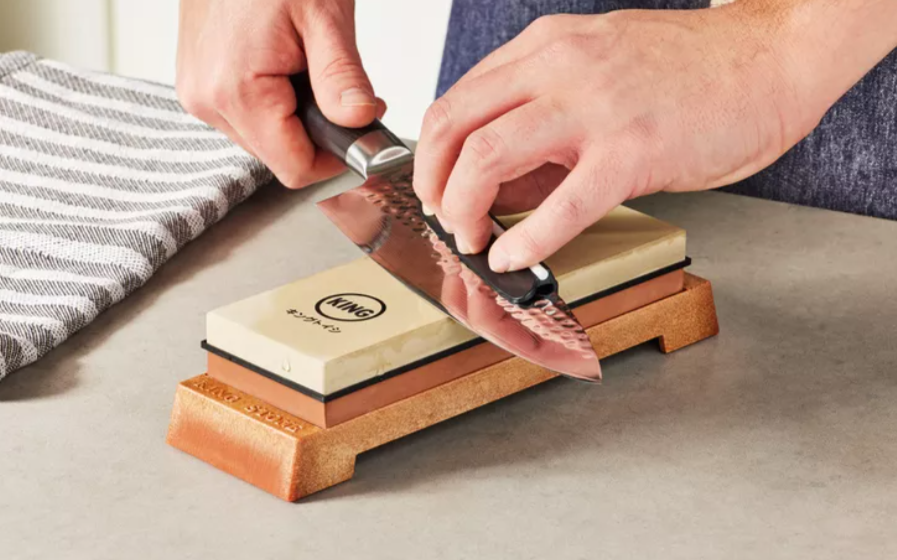
Your Path to Razor-Sharp Knives
The decision of which best whetstone to buy will ultimately depend on your needs, budget and what you are hoping to accomplish sharpening wise. Best value for beginners: The King two-sided stone. With the Sharp Pebble kit, you get everything to learn how to use it right. DMT diamonds offer professional durability for the serious sharpener.
Remember that sharpening practice makes perfect. Your initial efforts may feel awkward, but do not give up. After a couple of sessions you’ll build the muscle memory and confidence to maintain impressively sharp edges.
A sharp knife makes you cook differently. Prep work is faster and more fun. Well-made slices maintain food texture and flavor. And, most importantly, you’ll be working more safely with a blade that cuts where it’s supposed to cut instead of slipping around randomly.
Begin with a good stone from our recommendations. Just get the hang of one basic method, drill it into your hands by doing it every once in a while, and find out just how much getting sharp knives (and keeping them that way) makes in your kitchen. Your tomatoes, onions and fingertips will thank you.
