
7 Budget-Friendly Knife Sharpeners That Actually Work
Have you ever tried to chop a tomato, but have it squish instead? Then cut meat or chicken and it felt like you were sawing through leather? A dull knife is not only annoying, it’s a potentially dangerous hazard. When the knife does not cut easily, you are applying more pressure and exponentially increasing your likelihood of slipping and causing an injury to yourself.
The good news: There’s no need to spend a fortune when it comes to keeping your knives sharp. The budget knife sharpeners have made a huge leap forward over the past few years and it’s genuinely possible to get some high-quality tools for less than it costs to eat out. Whether you’re a home cook who makes dinner every night or someone like me who often struggles to chop vegetables, a sharp knife will make your cooking faster (and safer) and the process much more fun.
In this article, I’m going to take you through seven low-cost knife sharpeners that can bring real results. We’ve picked each one because it’s effective, not too costly when compared with higher quality models, and straightforward enough for anyone in your home to use without extensive training. Let’s take a look at the choices that will turn your tired knives into razor-sharp blades.
What Is A Good Knife Sharpener?
But before we get to the individual products, let me first discuss what separates a decent sharpener from a dud.
Ease of Use
You don’t want to spend hours watching tutorials on sophisticated techniques, not when you just need a kitchen knife sharpened. The best budget knife sharpeners are “intuitive”—you shouldn’t have to watch 12 YouTube videos before you figure it out yourself. Seek tools that have easy-to-follow instructions and a straightforward construction.
Consistency
A great sharpener yields identical results whenever you use it. Consistency means that your knife will be sharpened evenly across the entire blade, not just in parts. This eliminates any weird angles that will destroy your knives over time.
Durability
An affordable sharpener should last years. Look for reviews to see if other buyers say parts break or wear out quickly. The materials determine the quality of your sharpeners and how long they will serve you.
Versatility
Some knives are straight-edged; others, serrated. Some blades are thick, some are thin. The more kinds of knives your sharpener can handle, the better value you are getting. But keep in mind that sometimes custom tools work better than one-size-fits-all solutions.
7 Simple, Inexpensive Sharpeners That Work
And finally, here are some of the products that do the job without breaking the bank:
1. Pull-Through Sharpeners: Quick and Simple
Pull-through sharpeners are the easiest option. It’s straightforward and easy to use: you just insert the blade into a slot, and pull it through a few times. The sharpening materials inside (typically carbide or ceramic) actually do the work.
These sharpeners are usually priced in a range of $10 to $25. They’re quick, skill-free and fit easily in a drawer. The downside? They take away more metal than other methods, so your knives will require replacement sooner if you use them often.
Best for: Those who want fast results without learning new skills. Great for daily maintenance of your kitchen knives.
Pro tip: Apply gentle pressure and pull the knife through at a steady pace. Jerky movements create uneven edges.
2. Sharpening Stones: Traditional but Effective
Whetstones (also called sharpening stones) have been used for thousands of years because they work. You wet the stone, hold your knife at a particular angle, and run the blade across in even sweeps.
Nice starter stones can cost between $15 and $30. You’ll need to sharpen them manually using the included stones, and they take longer than pull-through models, but you have total control over the way you sharpen. Stones also remove less metal, thus prolonging the life of your knives.
It takes time to learn how to work a stone. You’ll have to keep the right angle (usually 15-20 degrees) and to apply even pressure. But when it becomes second nature to you, you’re left with something that will last indefinitely.
Best for: Those who are willing to take the time needed to learn correct form. Terrific if you’re the type who values knife longevity and demands professional-level sharpness.
Pro tip: Get a dual-grit stone (one side coarse, one fine) so that you can sharpen and then polish.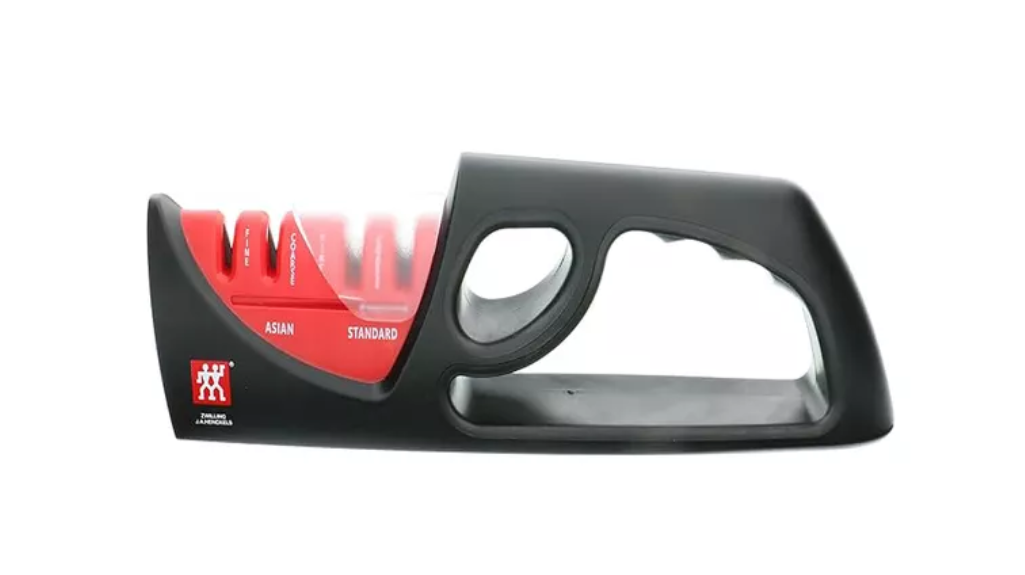
3. Electric Knife Sharpeners: Power and Speed
There are electric sharpeners that take all of the work out for you. You plug them in, turn them on and guide your knife through motorized slots. The angle is true to the machine and firm pressure is applied.
Entry-level electric models are priced $30 to $50. They’re much faster than manual models and do a great job with little effort. But they crowd the counter more and can be loud.
These sharpeners are ideal for folks who sharpen many knives often. If you’re only going to sharpen a knife once every couple of months, something simpler may make more sense.
Best for: The serious time-strapped cook who wants results without lifting a finger. Perfect for a home with many knives to grind.
Pro tip: You don’t need to push hard—let the machine do its thing. Too much force can also damage the sharpening stone and your knife.
4. Handheld V-Sharpeners: Portable Convenience
A V-sharpener is about the size of a small block and offers a v-shaped slot. You keep the sharpener steady and pull the knife through its V shape a few times. They’re small, lightweight and very portable.
They generally run from $8 to $20. They’re ideal for camping, RVing or to leave in your tackle box. They’re great for general sharpening, but they don’t allow you to achieve the ultra-fine edge you can get from stones or high-end electric models.
Best for: Those who need portability or have very limited space. Good for backup sharpener or outdoor adventures.
Pro tip: Set the sharpener on something stable or hold it by the built-in grip, if there is one. This will keep the tool from sliding about on you while working.
5. Honing Steels: Keeping Them In Peak Condition
Technically, most “sharpening” steels aren’t sharpeners; they’re straighteners or realigners of a blade’s edge. But some, while not really scouring off the metal and sharpening, do take off enough to keep the blade fresh.
You can find good rods from $10 to $30. They are perfect for keeping knives sharp between full sharpenings. Professional chefs use them all of the time in that they do a great job keeping blades aligned.
You may be intimidated by the rod, but you’ll soon become one with it. You grip the rod vertically by its handle and swipe one way and then the other down on an angle across both sides of your blade.
Best for: Routine maintenance between sharpenings. Great for someone who cooks a lot and really wants to keep knives in the best possible condition.
Pro tip: If the old-school vertical method makes you nervous, sandwich the rod horizontally between your work surface and a cutting board for extra stability.
6. Diamond-Coated Sharpeners: Long-Lasting Performance
Diamond sharpeners have industrial diamonds bonded to a surface. They cut faster than ceramic or stone, and they tend to last longer as well. There are diamond-coated models, pull-throughs, rods and plates.
Cheaper diamond alternatives begin around $15 to $35. They’re especially useful for bringing back very dull knives, as diamonds are harder than steel. The aggressive cutting action will not keep you sharpening.
One caveat: Diamond sharpeners can be overkill for very thin or delicate blades. They excel at standard kitchen knives and outdoor blades.
Best for: Anyone with extremely dull knives that require significant restoration. Good for anyone looking for a sharpener that will far outlast the rest.
Pro tip: Diamond sharpeners work dry but can work even better with a little water, and you can use a small amount to extend the life of the diamond coating.
7. Guided Sharpening Systems: Accurate Metal Removal On A Budget
Clamp systems and angle guides on the more sophisticated models ensure perfect uniformity. You lock your knife into the clamp, and guides hold your sharpening stone at just the right angle.
Basic guided systems are priced from $25 to $50. They serve as the middlemen between cheap pull-through models and fancy pro gear. There is little learning curve because the guides do all of that for you.
These systems are bulkier than the other choices and take more time to set up. But the results it achieves match those of far more costly sharpeners.
Best for: Those who seek the quality of stone with less need to be skillful. Great option for budget knife lovers still seeking precision.
Pro tip: The important thing is that you take your time setting up. Ensuring that you’re all set up to go before you begin will save frustration down the line.
Comparing Your Options
| Sharpener Type | Price Range | Skill Level | Speed | Edge Quality |
|---|---|---|---|---|
| Pull-Through | $10-$25 | Beginner | Very Quick | Good |
| Sharpening Stone | $15-$30 | Intermediate | Slow | Excellent |
| Electric | $30-$50 | Beginner | Fast | Very Good |
| V-Sharpeners | $8-$20 | Beginner | Fast | Good |
| Sharpening Rods | $10-$30 | Intermediate | Very Quick | Good |
| Diamond-Coated | $15-$35 | Beginner | Fast | Very Good |
| Guided Systems | $25-$50 | Beginner | Moderate | Excellent |
Find the Sharpener That’s Right for You
There are so many budget knife sharpeners on the market which one should you choose? Ask yourself these questions:
How often will you sharpen? If you cook every day, you might want to invest in both a quick maintenance tool (such as a rod) and something for full sharpening (such as a stone or an electric model). Infrequent cookers may be able to get by with a basic pull-through sharpener.
What’s your skill level? Be realistic about how much time you will actually dedicate to learning. Stones work, but you have to practice them much like anything else. Both pull-through and electric models are good to go out of the box.
How many knives do you own? The more knives you own, the more time you’ll spend sharpening them. Electric and pull-through sharpeners will save time if you have a full knife set to maintain. For only a few knives, any solution will suffice.
Where will you store it? Big electric sharpeners take up valuable counter or drawer space. Small V-sharpeners or rods can be stored in a drawer. Consider your kitchen layout before you buy.
How to Get the Best Results
No matter how much or little you spend on a knife sharpener, the following tips will make it easy to achieve professional results.
Start with clean knives. Clean and dry your blade before sharpening. Food dust and grease can impair the sharpening process and hurt the tool.
Don’t oversharpen. More isn’t always better. Just a few passes through your sharpener should do the job. Oversharpening rids you of excessive metal and shortens the life of your knives.
Test as you go. After a few swipes, carefully check sharpness by cutting paper or a tomato. This guides you when to stop, helping to discourage oversharpening.
Follow the instructions. Each type of sharpener has a best method. Spend five minutes on the manual—it makes a world of difference.
Maintain your sharpener. Clean your sharpening tools regularly. Stones need flattening occasionally. Slots need to be cleaned on electric models. The care and proper maintenance of a sharpener is a very important thing to consider.
If you’re looking for professional knife sharpening services or want expert advice on maintaining your blades, professional help is always available.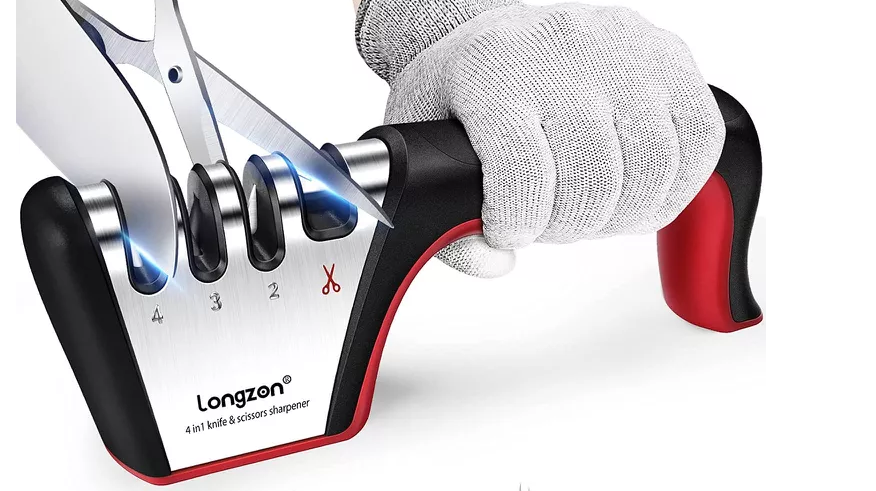
Common Mistakes to Avoid
Even with good budget knife sharpeners, there are mistakes that end up in a not-so-good result.
Using the wrong angle is almost universally the biggest error people make. Too steep and you’ll form a thick edge that will quickly become dull. Too shallow, and you won’t really sharpen the blade. Most kitchen knives do their best work at 15-20 degrees.
Too much pressure goes wrong. Allow the sharpening surface to do its work. Too much pressure can ruin your blade and sharpener… and it makes this unnecessarily hard.
When you fail to consider serrated knives it could be frustrating. Serrated edges don’t do well with most standard sharpeners. You’ll need the right tools—or should take serrated knives to a professional.
Safety matters. Never sharpen towards yourself. Do not place fingers on the blade. Take one step at a time, don’t rush into it.
For more detailed guidance on proper knife sharpening techniques, expert resources are readily available.
When You Should Invest in New Knives Instead
Every now and then a knife that’s too far gone is just too far gone, even for one of the best budget knife sharpeners. Here’s when to consider replacement:
Sharpening is not going to do anything if the blade’s got chips and cracks. These issues with the blade structure render the knife unusable. Also, if the blade has been worn down through years of sharpening, it is time you consider replacing your knife.
A really cheap knife with really poor quality steel can actually be hard to get sharp and stay sharp when you sharpen them. If you’re sharpening the same knife every week, it’s not the sharpener that is at fault—it’s your knife.
Frequently Asked Questions
How often do I have to sharpen my kitchen knives?
For the regular home cook, sharpening every 2-3 months is fine. Hone weekly with a honing rod between full sharpenings to keep the edge. Whenever you find that your knife resists slicing through tomatoes or onions, it’s time to sharpen.
Can cheap sharpeners ruin my expensive knives?
Good budget knife sharpeners should never damage your knife when used correctly. The secret is following instructions and not over-sharpening. Very high end Japanese knives made with highly specialized steel could potentially be worth it to have a professional sharpen—but even then, that’s debatable.
What’s the difference between sharpening and honing?
In the process of sharpening, metal is removed to form a new edge. Honing changes the alignment of the existing edge, without removing metal. Honing is like maintenance, and sharpening is more the restoration. Frequent honing minimizes the frequency that you need to sharpen.
Can electric sharpeners be used on all knives?
Nearly all electric sharpeners do a rock-solid job with typical kitchen knives. But the biggest problem is that they don’t fit really thick blades, crazy thin Japanese knives and odd knife profiles. Double-check product specifications before purchasing.
How long does it take to sharpen a knife?
Pull-through and electric sharpeners work in less than a minute per knife. Stones take about 5-15 minutes, depending on how dull your blade is and if you can use it. Guided systems are in the middle at 3-10 minutes per knife.
Can I use these to sharpen my serrated knives?
Most sharpeners don’t do well with a serrated edge. You just have to get a tapered sharpening rod that will fit in the serrations. A few niche pull-through models have serrated knife slots, but quality is mixed. Professional sharpening is the best option for your valuable serrated knives.
Making Your Investment Count
Low-cost knife sharpeners demonstrate that you don’t have to break the bank to keep your knives in top condition. Pick that simple pull-through model or something like it, as long as you actually use it.
A sharp knife will change how you cook. Prep work is faster and more fun. You’ll waste less because proper cuts keep ingredients fresher. And, most importantly, you will be safer in the kitchen as sharp knives require less pressure and keep you in control.
Begin by investing in one sharpener that is appropriate for your skill level and needs. Once you’ve grown more comfortable sharpening, you may eventually want to include additional tools in your set. Most cooks will have both a quick little honing tool and a sharpener.
The best sharpener is the one you use often. Don’t overthink the decision—choose something that works for your lifestyle and is inexpensive, and begin practicing. Your knives (and your fingers) will be grateful.
Final Thoughts
It shouldn’t be expensive or complicated to keep your knives sharp. The seven budget knife sharpeners we’ve listed above provide different options for you no matter your skill level and individual situation. From designs that pull through and are finished in seconds to stones capable of professional results, something for everyone is possible on a budget.
It’s important to remember that consistency is more crucial than having the most expensive tools. Better a $15 sharpener that’s used than a $200 system languishing in a drawer. Begin with something simple, practice the technique, and relish in the delight of slicing with really sharp knives.
Your kitchen is entitled to sharp tools, and your budget is deserving of respect. You can accomplish that with any of the affordable sharpeners we’ve found.
