
The Point of a Sharp Knife, and Why It Matters More Than You Think
Any cook can relate to the frustration of trying to cut a tomato with a dull knife. The knife doesn’t cut clean, smooshing up the tomato and creating a mess. But there’s a surprise here: Dull knives are actually more dangerous than sharp knives. When a blade no longer cuts well, you have to exert more pressure on the blade in order to accomplish that deed, which may lead directly toward slipping and injuring oneself.
Enter knife sharpening devices. These useful tools return your blades to their original sharpness, so you can cook with confidence and a sense of excitement. If you’re a home cook or just a big fan of the grill having the proper knife sharpening tools can make all the difference in your kitchen (and outdoor cooking) experience. Here, we’ve rounded up 10 excellent choices that you could easily purchase online to help keep your knives in top form.
What Makes a Good Sharpening Tool?
Before we get to specific products, let’s discuss what sets great knife sharpening tools apart from the duds. A sharpener should be user-friendly, even if you’re a complete novice. It should be effective on all sorts of knives, from chef’s to serrated bread. There’s also durability to consider — the last thing you want is something that’ll wear down or fall apart after just a few uses.
The great ones also consistently deliver results. Your blade’s sharpness should not be fleeting, being sharp in one area and dull in another. Safety mechanisms such as non-skid bases and splash guards are also critical. Finally, consider your skill level. Some are skill-based, some more like a machine.
The Top 10 Knife Sharpening Systems on the Market Worth Considering
1. The Electric Knife Sharpener: Fast Meets Convenient
Electric sharpeners are the quickest way to get a blade back on track. These electric grinders use spinning abrasive wheels to sharpen and polish your knife edge. You just pull the blade through guide slots, which position it at the proper angle and let the machine do its thing.
A majority of electric models will come in multi-stages. The first develops the edge, the second hones it and the third puts a razor-sharp finish on it. They are for use on both straight-edge and serrated knives. Popular makers like Chef’sChoice and Work Sharp produce reliable devices that range from about $50 into the $150s for professional-grade models.
The primary benefit is speed — you can sharpen a knife in less than a minute. But these implements shave away more metal than hand tools, which can lessen your knife’s useful life if you use them too much.
2. Whetstone Sets: The Traditional Champion
Whetstones, or sharpening stones, have been in existence for hundreds of years. These flat stones are available in different grits, from coarse (for extremely dull knives) to fine (for a polish and finish). Using a whetstone takes skill, but it’s considered the best way to achieve pro results by many cooks.
Most sets consist of 2 or 3 stones with varying grits, typically between 400 and 6000. You soak the stone in water and then slide your knife across it at a consistent angle, usually 15 to 20 degrees. There is a learning curve to this process, but you have total control over the sharpening.
You can get good quality whetstone kits for between $30 and $100. Japanese water stones are particularly beloved by knife enthusiasts. These require a bit more skill than some other types of knife sharpening tools, but the results are worth the effort.
3. Guided Pull-Through Sharpeners: Easy and Effective
A pull-through sharpener is great for folks who want sharp knives with none of the fuss. These small tools have slots that are pre-defined, which the carbide or ceramic sharpening component fits into. You just pull your knife through the slot a few times, and there’s sharpness.
These are very cheap sharpeners; you’ll often find them between the $10-$30 price range. They can fit in a drawer, and they require no setup. Smith’s and Lansky are brand names that both make well-reviewed models designed to last for years.
The drawback is that it’s not as precise as other approaches. It has no adjustable angle, which might not work out for all knives. They’re also more aggressive material removal than stones. But for everyday kitchen use, these are some of the most convenient knife sharpening devices around.
4. Sharpening Rods and Steels: Quick Touch-Ups
Technically speaking, a honing rod doesn’t actually sharpen your knives; it simply realigns the edge of the blade. But they’re perfect for in-between full sharpenings. Top chefs rely on them prior to every shift.
With ceramic or diamond rods, tiny particles actually strip small amounts of metal away. You would hold the rod vertically and then sweep the knife down at an angle, switching sides. It does take some practice to keep it precise, but once you get the hang of it, we promise, it will be second nature.
Basic models sell for $15; premium ceramic or diamond models are available for around $50. They’re also perfect complements to the other knife sharpening tools in your arsenal.
5. Guided Field Sharpeners: Professional Results on All Knives
Guided systems have clamps and angle guides to hold your knife at the correct angle as you sharpen. Attach your knife to the device, establish your desired angle and move sharpening stones across the blade.
The Lansky and Work Sharp Precision Adjust are common ones. These devices take the guesswork out of sharpening. You produce results that belong on the walls of a professional shop, with no years of training. They work on any kind of knife, and they permit you to select just how sharp the edge should be.
Prices vary from $40 to $100 depending on features. It takes a couple minutes to set up, then 10-15 minutes to sharpen a knife. The downside of time is accuracy and control.
6. Pocket Sharpeners: Tiny Tools, Incredible Edges
Pocket sharpeners are little gadgets you can take with you anywhere. They’re popular with hunters, campers and fishermen who must sharpen knives in the field. Most are carbide- or ceramic-based in a small housing.
Despite being small, the best pocket sharpeners do an impressive job. Units from brands such as Work Sharp and Smith’s run between $8 and $25. They’re not right for fine kitchen knives, but they’re perfect for outdoor and utility blades.
Store one in your tackle box, camping gear or workshop. These small knife sharpeners rescue a working knife when you need an edge in a hurry.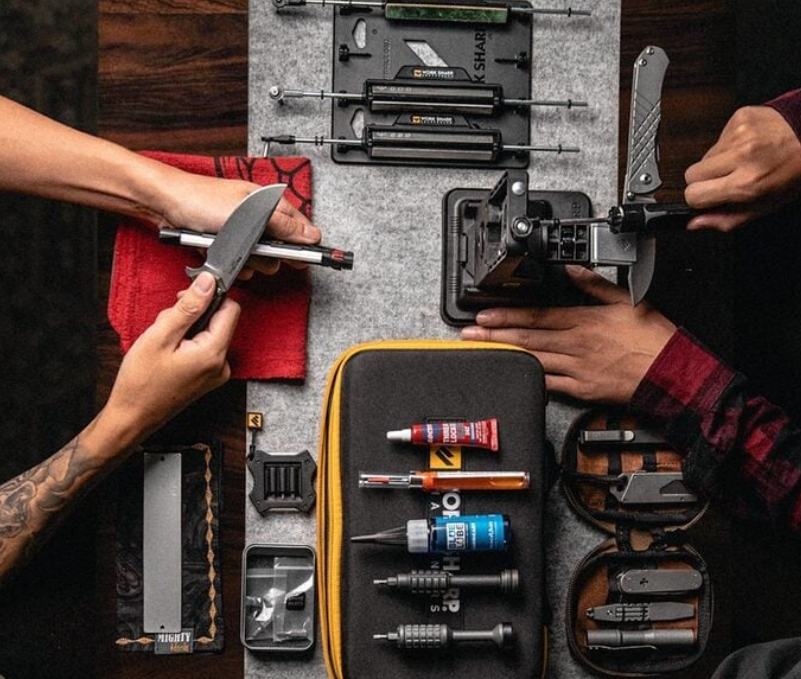
7. Diamond Sharpeners: Durable Diamond Plates
Diamond sharpeners employ industrial diamonds embedded in a steel plate or plastic base. These are some of the most long-lasting sharpening stones for knives. Unlike stones that wear down and require flattening, diamond plates stay flat and in peak sharpness for years.
And they work quickly because diamonds are harder than the steel in your knives. You may use them with water or dry. They’re great for very blunt knives or knives that are made from hard steel, which is tough to sharpen with normal stones.
Quality diamond plates are $30 to $80. Diamond Machining Technology is a first-rate manufacturer that offers plates in different grits. They are smooth, easy to throw in a bag or tuck into a pocket and virtually indestructible, which is why they’re popular among woodworkers and outdoor types.
8. Belt Sharpeners: Industrial Power for Home Use
Belt sharpeners harness abrasive belts like those you might see on a bench grinder, only for knives. The Work Sharp Ken Onion Edition is the model you will see the most home users using.
These machines will provide knives an extremely sharp edge very quickly. You can have an angle adjustment, and can change the rough or fine belts if you want to even sharpen tools and scissors. They’re also aggressive enough to reestablish a damaged edge, yet are fine enough to work on your kitchen knives.
Prices begin at around $100 for basic models and can go up to $150 for those with angle guides and variable speed. They’re good if you have a lot of knives to sharpen, or you want one tool that will be up to the task of everything from a pocket knife to your scissors.
9. Ceramic Sharpening Sticks: Delicate and Accurate
Ceramic rods or plates remove a few layers of metal. They’re also more gentle than sharpeners that use diamond or carbide, so they can be a good way to preserve already-sharp knives or add a polished edge to blades.
These knife-sharpening tools take some different shapes — they might be a handheld V-shaped thing, or a set of rods, or flat plates. They are also long-wearing, don’t rust, and hold a very fine edge. Lots of cooks use ceramic sharpeners to keep their blades in shape between running them over coarser tools.
Prices can vary dramatically, from as little as $10 for a simple handheld device to over $50 for quality rod systems. Spyderco sells really nice ceramic sharpeners in various shapes and grits.
10. Sharpening Kits that Combine Everything
Full sharpening kits come with all sorts of tools for a variety of uses. A basic kit might include a coarse stone for repair work, a medium one for sharpening and a fine stone for polishing, plus a honing rod for maintaining the edge.
These packages are always a great deal too, typically priced lower than if you go to buy them separately. They are guaranteeing that you have the right tool for every task. A lot of kits are packaged in storage cases to keep it all organized.
Combination sets of good quality cost from $40 to $120. They’re great for anyone getting started with collecting knife-sharpening tools, or as gifts for home cooks.
How to Select Sharpeners Suitable for Your Needs
Choosing among myriad knife sharpening tools may be overwhelming. Begin by assessing your skill level. If you’re new to this, electric sharpeners and simple pull-through models are good to start with. If you relish the process of learning new things and prefer to have the most control over your edge, whetstones or guided systems will be more up your alley.
You can also think about your knife collection. If you primarily use average kitchen knives and can commit to routine knife maintenance, any one of the machines below will be a good solution for your needs. If, however, you have expensive Japanese knives or specialized blades, spending the money for high-quality stones or guided systems that won’t damage them can make sense.
There’s a sharpener for every budget, but there is also this to consider: Good sharpeners last years. A $50 electric sharpener that lasts 10 years is cheaper than replacing dull knives. Think of it as an investment into your cooking tools.
For professional knife sharpening services and expert advice on maintaining your blades, visit DTDF Knife Sharpening to learn more about proper blade care techniques.
Common Sharpening Mistakes People Make
Even the best knife sharpening system will only work well if good technique is used. The most common error is the incorrect angle. Most kitchen knives work best at a 15-20 degree angle. Sharper edges can be achieved but they will not last for as long. Shallower angles make the knives sharper but also dull more quickly.
Another mistake is that too much pressure is used. Let the sharpener do the work. Heavy pressure isn’t what sharpens the blade faster — all it does is remove more metal, and can harm your knife. Use light, consistent strokes instead.
People also sharpen too often. For most of us, we need to sharpen our kitchen knives only a few times a year, depending on use. Use a honing rod to hone the blade between sharpenings. Over-sharpening your knives will cause them to go dull faster.
Lastly, in many cases people will fail to clean their knife before and after sharpening. Metal particles and food remnants can inhibit the process, and leave your sharpener soiled.
Maintaining Your Sharpening Tools
Your knife sharpening equipment requires maintenance as well. It is very important to flatten your whetstones frequently (at least every few months). They can have depressions you cannot even sharpen away. Clean after each use to avoid metal particles and dust.
Electric sharpeners require cleaning in and around their wheels. This is covered by most manufacturers. Diamond plates or ceramic sharpeners can be scrubbed with a brush and soapy water.
Keep all of your tools dry and away from rusting on metal parts. Store them away from moisture and extreme temperatures. The right storage helps protect your investment and will help ensure that your sharpeners are working when you need them.
According to America’s Test Kitchen, proper maintenance of your sharpening tools is just as important as the sharpening technique itself.
The Investment That Just Won’t Die
Good knife sharpening tools will easily pay for themselves. Having sharp knives in the kitchen is not only more fun, but it’s safer. They help maintain the blades of your knives in perfect condition and protect your expensive knife collection. You don’t need to throw out dull knives and buy new ones.
And a good chef’s knife costs $50 to $200 and up. A full sharpening rig is of about the same cost, but it does all your knives for years. The math is straightforward: sharpening tools make financial sense.
There’s pride in keeping your own tools, beyond the cost. It’s an immensely satisfying feeling to bring a dull blade back to razor sharpness. It’s a useful skill, and it serves you in life.
Frequently Asked Questions
How frequently should I sharpen my kitchen knives?
The average home cook should sharpen knives 2-4 times a year. Run a honing rod over it once a week to keep the edge happy between sharpenings. Heavy users could require monthly blade sharpening.
Can I use the same sharpener for all my knives?
The majority of knife sharpeners will work well on regular kitchen knives. Serrated knives require special sharpeners or a different method of sharpening. Very hard Japanese knives cut the best when sharpened on stone or diamond tools.
Are pricier sharpeners worth the extra investment?
You get what you pay for, and a quality sharpener will last a long time and perform better. A $100 guided system or set of quality whetstones will last you decades. The cheap $10 sharpeners work, but you might have to buy a new one every year or two.
Will sharpening damage my knives?
When done properly, sharpening preserves your knives. But aggressive sharpeners take off more metal than is needed. Try to use the lowest abrasiveness that works well to prolong the service life for your knives.
Can ceramic knives be sharpened with regular sharpeners?
No, you can’t sharpen ceramic knives with a regular sharpener. Ceramic knives cannot be sharpened using regular stones and sharpeners. Diamond whetstones or dedicated ceramic knife sharpeners are necessary.
What’s the distinction between honing and sharpening?
Honing realigns the knife edge, not removing metal. When a blade is sharpened you’re removing metal to form a new edge. And both are crucial to the care of a knife.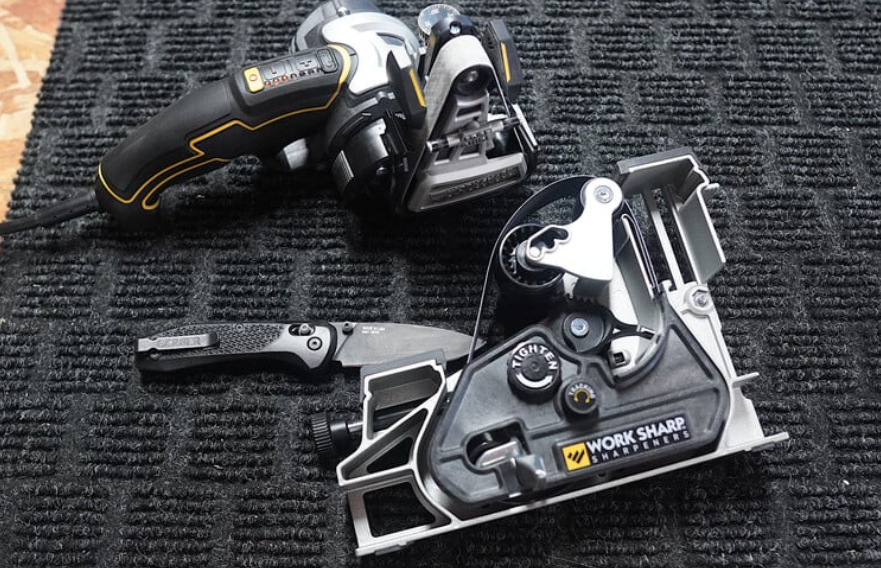
Final Words on Keeping Your Blades Sharp
The correct knife sharpening tools can make all the difference in your kitchen. Sharp knives make cooking food quicker and safer but also more fun. Whether electric sharpener for convenience, whetstone for traditional control or a guided system for accuracy, that investment will pay dividends every time you cook.
Begin with a good sharpener that’s right for your skill level and what you need it to do. You will probably acquire other tools as you gain experience. The trick is using your sharpener often enough that you never allow them to become dangerously dull.
Remember, the best sharpener is one you’ll actually use. A simple pull-through to which you’ll actually turn regularly trumps a pricey whetstone set gathering dust in a drawer. Pick the tools that are appropriate for your life and then you’ll have a knife that will give you years of great service.
The best knives aren’t all about performance — they are also a source of pride for your profession. Take care of your tools, and cooking is more than a chore. With each perfectly sliced item, it becomes a treat to be enjoyed.
