
Introduction: Benefits of Using a Whetstone
Let me ask you HEY!!! HAVE YOU EVER HAD TO DEAL WITH A DULL KNIFE that just can’t seem to slice a PAPER THIN TOMATO WITHOUT MASHING IT?? The positive effects of whetstone sharpening will inspire you to spend more time in the kitchen. The whetstone, also called a sharpening stone, is the perfect model of simplicity and efficiency: a simple rectangular block that revives dull edges using an age-old method that takes us back to centuries.
With electric sharpeners or those quick-fix pull-through contraptions, for example, you have little control of the edge you’re playing with your knife. They achieve this the same way: by grinding off small pieces of metal into a razor-sharp edge. There is a small but potent faction of professional chefs who will not use anything other than whetstones because the results are one that no other method comes even close to achieving.
In this guide we will cover five key benefits you’ll receive from regular use of a whetstone. Whether it’s for saving money or honing your skills in the kitchen, you won’t believe how much of a must-have this classic tool will become once you add it to your kitchen lineup. Whether or not you’re an experienced cook or even a novice appreciation for these perks will alter the way everyone leaves knives in their kitchen.
1. Superior to All Other Methods in Edge Quality
The Science Behind Superior Sharpness
You’re going to get a sharper edge that’s simply not possible with an electric sharpener or honing rod when you use a whetstone. Here’s why this is important: whetstones remove metal slowly and evenly, so you can create the perfect angle for your blade. Electric sharpeners, on the other hand, take off too much metal too fast and tend to result in uneven edges.
The advantages of whetstone sharpening are apparent in the first slice with a freshly sharpened knife. The blade cuts through food with ease. You’ll feel (and smell) the difference when you’re chopping onions, slicing meat or vegetables. A knife sharpened on a whetstone needs very little pressure, which makes cutting safer and you get a much better cut.
Control Creates Perfection
With a sharpener, you can only manage so much. You determine the angle, the pressure and the number of passes. This hands-on method allows you direct control over the sharpness of your blade based on what materials you’re cutting. Looking for a razor edge that will slice sashimi? A whetstone gets you there. Chop chicken bones? Want a little more support but not as stiff or tough as beeswax? You can create that too.
Electric sharpeners can lock you in to preset angles that don’t necessarily work for every knife. They’re one-size-fits-all answers in a world where not all knives require the same care. Sharp whetstones allow you the freedom to sharpen each blade properly.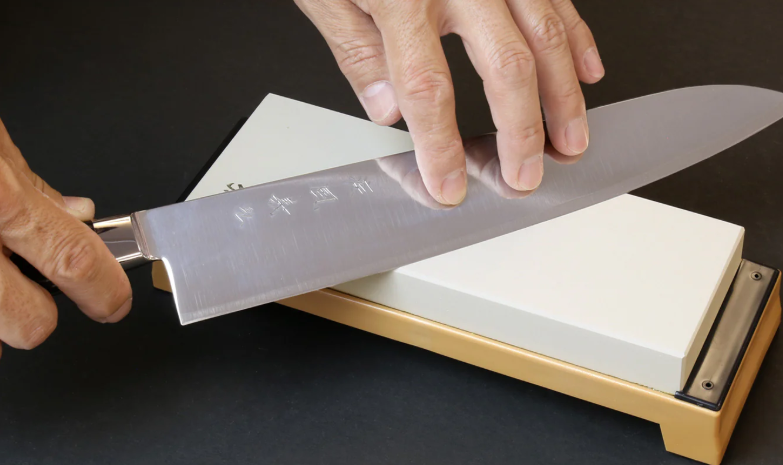
2. Huge Savings Throughout the Life of Your Knife
Stop Replacing, Start Maintaining
Good kitchen knives are on the premium £50-£300 end. When these dull, others replace them with new ones or arrange for someone else to sharpen the knives professionally. Option one and option two are both unnecessary drains on your wallet. Other whetstone advantages include being safe to use, fast and effective.
A good whetstone costs from £20 to £60 and lasts for years, even decades, with care. It costs £5 to £15 per knife for professional sharpening services, which you’ll require several times a year if you cook at least a couple of meals each week. Let’s look at the numbers:
| Method of Sharpening | First-Time Expense | Annual Cost (5 knives) | 5-Year Total |
|---|---|---|---|
| Professional Service | £0 | £150-£300 | £750-£1,500 |
| Electric Sharpener | £50-£150 | £0 (plus replacements) | £150-£300 |
| Whetstone | £30-£60 | £0 | £30-£60 |
Your Knives Last Longer
Here’s something I bet you didn’t know: electric sharpeners chew up your knives a lot faster than whetstones do. They take off a lot more metal with each sharpening. A knife that would give 20 years of life when regularly maintained was degraded to a life span of 5-7 years with frequent use of an electric grinder.
This whetstone only removes as much as the hardest stone and works to bring the edge back to peak performance. With this gentle approach your knives keep their original shapes and edges up to much longer. You’re saving money not only on sharpening, but you’re prolonging the life of those expensive kitchen tools.
3. Your Cooking Skills Actually Improve
Precision Changes Everything
A dull knife makes you a worse cook. This isn’t an exaggeration. When you take care to sharpen your knives frequently with a whetstone, you can make clean cuts that enhance the look and flavor of your food. Onions that are all cut to the same size will cook at the same rate. The veggies will also go on the plate looking professional.
Whetstone sharpening has several advantages, more than simply achieving a sharp knife. The process even teaches you the patience and fine attention to detail that transfer directly into cooking. You begin to observe the nuances of technique and results. You get more conscientious about your tools and how you use them.
Safety Through Sharpness
This may be counterintuitive, but sharp knives are safer than dull ones. Dull knives require more pressure to cut through foods and are hence more prone to slipping and causing injury. A properly sharpened knife goes exactly where you want it to go with minimal power.
When you attend to your blades through the use of a whetstone, incidents that occur in the kitchen will drop dramatically. You’ll have more control over how you cut, make cleaner cuts and feel safer while cooking. This trust materializes in quicker preparation times and more satisfying cooking.
4. The Meditation We Don’t Talk About
Finding Calm in the Rhythm
Using a knife and a whetstone is efficient: it’s downright soothing. It’s meditative, pressing and sliding the blade across the stone over and over. A lot of people view this 15-20 minute time-out as a meditative break from the pressures of daily life. It’s a matter of stopping, concentrating on just one thing and working with your hands.
In this screen-filled age, it’s almost a course for mental health to have an activity that engages both your brain and hands. It’s like a meditation where I lose myself while sharpening knives. You concentrate on the angle, the sound of steel across stone and the sensation of a blade working. This kind of concentration eases stress and clears your mind.
Building a Valuable Skill
Mastering a traditional craft really is satisfying. Sharpening with a whetstone is something that takes skill to get good at, but the final edge will really make you feel like you have accomplished something special. You’re learning something that humanity has been doing for thousands of years a skill that links you to history and serves both a practical purpose now.
Whetstone mastery has its rewards beyond a keen edge in the kitchen. Your hand-eye coordination, patience and problem-solving skills will grow. You start to get a feel for different blade finishes and adapt your technique. They give you confidence and a sense of self-reliance.
5. Environmentally Responsible Impact You Can Feel Good About
Less Waste, Better Planet
Millions of dull knives are thrown away each year, because people find buying replacements easier than finding someone who can sharpen them. Electric sharpeners die and need to be replaced, breaking down into more e-waste on our planet. Are there any sustainable alternatives to a knife sharpener? Whetstones provide a zero waste solution which fits in perfectly with a natural living lifestyle.
A single whetstone can even last 20-30 years. It doesn’t need any electricity, doesn’t produce electronic waste and keeps the knives you already own out of landfills. The advantages of whetstone sharpening include, that you keep your environmental footprints in a considerable size.
Natural Materials, Simple Design
The majority of good whetstones are constructed from real stone or ceramic. They hold no motors, electronics or plastic that pollutes the environment when being made or thrown out. With a simple design, there’s nothing to break down or malfunction. And when a whetstone does eventually wear out, it doesn’t produce toxic waste.
When you select whetstones, you also achieve a more environmentally friendly approach. You’re saying no to disposable consumer culture and yes to tools that have been around forever. This choice counts, particularly in a time when we are all trying to lessen our impact on the planet.
How You Can Begin Sharpening with a Whetstone Right Now
Getting Your First Stone
For neophytes, a double-sided stone with two grits should suffice. Find yourself a 1000/3000-6000 grit stone. The 1000 grit side is used to repair damage and for breaking the edges of knives. The smoother side hones and refines the edge.
For beginners, you can expect to spend about £30-£50 for a good stone. Some names to look for include King, Suehiro, and Sharp Pebble. Those stones include instructions and many have angle guides to help you maintain consistent angles as you learn.
The Basic Technique
Begin by rinsing your whetstone with water and allow it to soak for roughly 10-15 minutes (some stones do not require soaking – consult manufacturer instructions). Put the stone on a wet towel to stop it from slipping. Lay your knife on the stone at a 15 to 20 degree angle. Away from you, the blade is pushed across the stone along a consistent angle and pressure.
Repeat this motion 10-15 times on one side, then flip the knife and do the same on the other side. You’ll feel a slight burr forming on the edge this tells you you’re removing metal correctly. Move to the finer grit side and repeat the process with lighter pressure to polish the edge.
Practice makes perfect. Your first few attempts might take 30-40 minutes per knife. With practice, you’ll sharpen most knives in 10-15 minutes. The benefits of whetstone practice compound over time as your technique improves.
Maintenance and Care
Keep your whetstone clean by rinsing it after each use. Store it in a dry place where air can circulate around it. Flatten the stone occasionally using a flattening stone or sandpaper on glass to maintain an even surface. These simple maintenance steps ensure your whetstone performs well for decades.
Sharpen your knives before they become extremely dull. Regular light maintenance is easier than trying to fix a badly damaged edge. Most home cooks will sharpen their primary kitchen knives every 2-3 months, depending on usage. For professional knife sharpening services or expert guidance on maintaining your blades, specialized providers can help you master the art.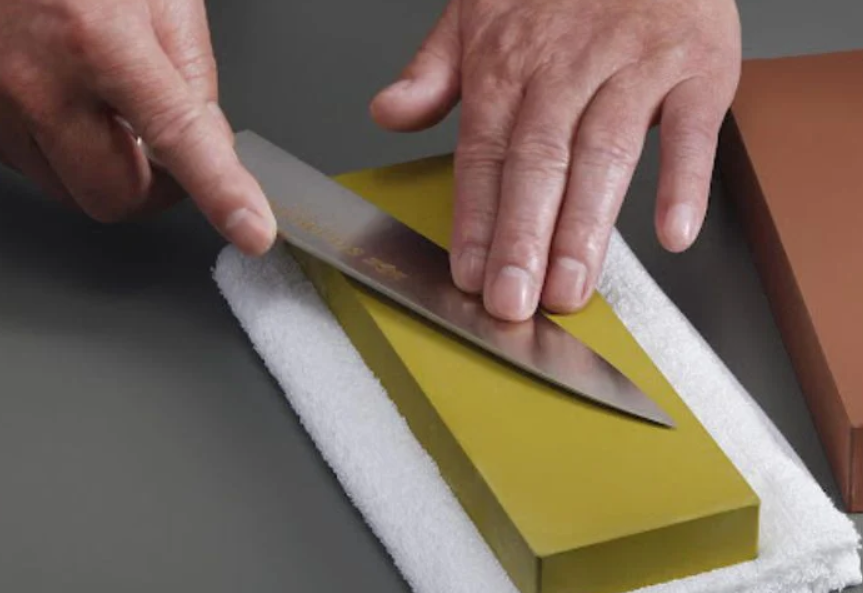
Frequently Asked Questions
How long does it take to learn proper whetstone technique?
Most people develop basic competency within 3-5 sharpening sessions. You’ll achieve good results from the start, but mastery comes with practice over several months. The learning curve is gentle, and you’ll see improvement with each attempt.
Can I sharpen all types of knives with a whetstone?
Yes. Whetstones work on virtually all knife types including kitchen knives, pocket knives, hunting knives, and scissors. Different blade materials might require different grit stones, but the basic technique remains the same.
How often do I need to sharpen my knives with a whetstone?
This depends on usage. For knives used every day, you can plan to sharpen them between 4-8 weeks. Knives that are used occasionally might be sharpened every 3-6 months. Find out how to test sharpness by slicing paper or tomatoes whenever they stop performing, get them sharpened.
Do I need several types of whetstones?
If you are just starting out I recommend a single combination stone (1000/6000 grit). As you progress, you could introduce coarser stones (400 grit) for knife repair or finer stones (8000+ grit) for razor edges. You’ll never need more than two or three stones all told.
Water stones vs oil stones, what’s the difference?
Water stones rely on water for lubrication and cut more quickly, so they’re also a favorite for kitchen knives. Oil stones use mineral oil, which cut more slowly but keep from glazing (loading) and last longer. Water stones are typically more beginner friendly and can deliver very good results with less effort. According to America’s Test Kitchen, water stones are particularly effective for achieving professional-level sharpness at home.
Conclusion: An Easy Decision That Changes Everything
Whetstone sharpening advantages: More than sharp knives. You save a lot of money over time and become a better cook which reduces environmental waste as well as provides traditional skills. There’s a moderate learning curve at first, but not only will you eventually master the art of cooking with this gadget, it also has some surprising long-term benefits for your kitchen.
But sharp knives turn the chore of cooking into a joy. They make cooking quicker, safer and just fun. When you sharpen those knives yourself on a whetstone, you’re adding levels of satisfaction, self-reliance and mindfulness to the experience.
You can be part of a team of cooks who have discovered, sometimes to their own surprise (I know I was not expecting to fall in love), that this tool that is literally thousands of years old survives because it deserves to. A well-used whetstone housed on your countertop isn’t just a display of quality it signifies a dedication to sustainable kitchen practices and honed knife skills. It’s a tiny, minuscule thing that sends ripples of good out into your cooking life.
No matter that you’re whipping up a quick weekday meal for your family or an extravagant feast for guests, cutting well with sharpened knives can take your dishes to the next level. The 15 minutes spent honing your blades with a whetstone will retreat dividends every time you cook. This is not just about a sharp knife, it is about feeling that you are in control of your tools, and valuing the craft of cooking, and finding satisfaction from doing things right.
Just give whetstones a try and you’ll ask yourself how come you haven’t found before about these amazing benefits!
