
Why You Want the Sharpest Knives in Your Kitchen
When it comes to cooking the freshest veggies and tenderest meat, nothing makes for a sharper chef than having sharp knives. It’s time you had your very own knife sharpener! A good knife slices the ingredients smoothly, helps you to save time and cook faster, and also makes cooking more safe. You could argue that a blunt knife is safer, but in fact it’s more dangerous because you have to use so much force and it can slip.
It’s 2025 and bladecraft has really gone high-tech. Manufacturers have started using high-performance materials to produce knives that will hold an edge. From slicing tomatoes, to carving meat, to chopping veggies — the right knife makes cooking a habit you love instead of hate.
In this guide, we’re going to take a look at the seven sharpest knives on offer this year and give you some tips on how to keep them at their best. Let’s dive into what sets these blades apart and how you can keep their razor-sharp edges.
How Sharp Can a Knife Really Be?
First, before I get into our best-in-class recommendations, let’s talk about what makes sharpness. There are three primary sources of a knife’s sense and performance of sharpness.
Blade Material Matters Most
The steel of a knife also is an important factor in determining how sharp the blade can get and stay. Durable high-carbon stainless steel is easily maintained and provides a long-lasting edge. The superior sharpness of Japanese VG-10 steel and the resistance to the element of rust. Damascus steel offers exquisite patterns yet keeps a sharp edge.
A few newer knives rely on ceramic blades that will remain sharp for years. Others are made of a high-carbon steel that can take the finest edge imaginable. The material determines not only a knife’s sharpness but also how you’ll maintain it down the line.
Blade Angle Creates the Edge
The geometry of sharpening and how an edge is developed also play a role in a knife’s cutting capabilities. Most western knives are ground to 20-25 degrees. Japanese knives are sharpened to a sharper 15-degree angle – that means easier slicing.
The sharper the angle, the finer the edge but also the more care and maintenance would be required. And larger angles are more durable. What kind of knife is best for you depends on how you will use it.
Manufacturing Quality Counts
Sharpness varies in knife manufacturing. Forged knives are hammered from one piece of steel, so you have a strong balanced blade. Stamped knives are stamped or cut from a sheet of metal and may be sharp, but typically do not last as long.
Hand-sharpened blades can have better edges than machine sharpened ones. Every blade in the premium collection undergoes a rigorous sharpening process with strict standards so that you can have any combinations of professional quality cutlery right from the convenience of your own kitchen.
The 7 Best Sharp Knives In 2025
Here are the best performers this year that have sharpness along with the construction quality.
1. Japanese Gyuto Chef’s Knife
The Gyuto is one of the best cutlery from Japan. One of the sharper knives we’ve tested, this multi-purpose chef’s knife from Zwilling features a thin blade that’s been ground to a 12-degree angle on each side.
Key Features:
- VG-10 Damascus steel construction
- 8-inch blade length
- Octagonal handle for comfortable grip
- Weight: 6.2 ounces
This knife slices through veggies, fish and meats like none other. Thin blade for less resistance, keeping food from sticking & tearing when cut. Minimal slicing resistance requires minimal pressure to cut through. Professional cooks appreciate the way it can perform delicate tasks, like filleting fish or making paper-thin vegetable slices.
Best For: The home cook looking for professional performance
2. German Carbon Steel Santoku
This Santoku was created using German design and Japanese engineering. The blade is made from high-carbon stainless steel that has been hardened to 60 HRC, ensuring it will maintain a razor-sharp edge.
Key Features:
- Full tang construction
- 7-inch blade with Granton edge
- Triple-riveted handle
- Lifetime warranty
The Granton edge (oval divots in the blade) keeps food from sticking. That’s what makes it ideal for things like chopping herbs, slicing cucumbers or butchering boneless chicken. It has weight to it, but not heavy.
Best For: Cooks who would appreciate a solid workhorse knife
3. Ceramic Utility Knife
Ceramic blade maintains sharpness 10 times longer than steel. This utility knife is proof that a modern material can out-one-up an old one when it comes to the sharpness and strength department.
Key Features:
- Zirconia ceramic blade
- 6-inch length
- Ultra-lightweight at 2.8 ounces
- Won’t rust or react with food
With a ceramic edge that’s precision-designed for fruits and vegetables. It especially shines when you are cutting tomatoes, bell peppers and citrus. But you should steer clear of frozen foods or bones: Ceramic can chip.
Best For: Fruit and vegetable preparation
4. Damascus Steel Paring Knife
Small but mighty, this paring knife is 67 layers of folded Damascus steel, producing both beauty and performance. Its 3.5-inch blade provides controlled precision, even when you’re doing some fine detail work.
Key Features:
- Hand-sharpened edge
- 15-degree blade angle
- Ergonomic pakkawood handle
- Comes with leather blade guard
Perfect for peeling an apple, deveining shrimp, or making garnishes. The Damascus pattern is unique for each knife, and the sharp edge allows for complex cuts where larger blades would just get in the way.
Best For: Detail cutting work and food decoration
5. High-Carbon Steel Bread Knife
No bread slasher or serrated knife will equal the cut achieved by these razor sharp teeth! The serrated edge will still shave hair.
Key Features:
- 9-inch blade length
- Offset handle design
- German stainless steel
- Precision-ground serrations
The offset handle raises your knuckles above the cutting board. Every tooth is meticulously sharpened, for neat cuts in bread, pastries and even tough-skinned fruit such as pineapple.
Best For: Bread, cakes, and large fruits
6. Titanium-Coated Chef’s Knife
This innovative blade is made with a titanium coating that’s three times tougher than standard steel. The result is one of the sharpest knives that will resist wear and corrosion.
Key Features:
- 8-inch blade
- Non-stick titanium surface
- Balanced weight distribution
- Dishwasher safe coating
The titanium coating resists sticking to food and gives you extra durability. Colors from gold to black add style to your kitchen. The edge is still extremely sharp and great for precision cutting even with the finish.
Best For: Kitchens with a lot of use requiring low hassle performance
7. Flexible Fillet Knife
Both fishermen and seafood lovers must have this specialty knife. Its flexibility allows it to bend and move smoothly in contour with bone; the sharp edge is ideal for slicing meat cleanly.
Key Features:
- 7.5-inch flexible blade
- Swedish stainless steel
- Textured grip handle
- Includes protective sheath
The thin, flexible blade curves around bones and cleanly strips skin with little waste. It’s also great for removing fat from meat or butterflying chicken breasts. Fillet knives are only as good as they are sharp, and this one is excellent.
Best For: Filleting fish and trimming meat
Compare Sharp Knives: Which is the Best Sharp Knife For You?
| Knife Type | Best For | Blade Material | Sharpness Level | Price Range |
|---|---|---|---|---|
| Gyuto Chef’s Knife | All-around cooking | VG-10 Damascus | Exceptional | $$$ |
| German Santoku | Chopping/slicing | High-carbon steel | Excellent | $$ |
| Ceramic Utility | Fruits/vegetables | Zirconia ceramic | Outstanding | $ |
| Damascus Paring | Elaborate work | 67-layer Damascus | Excellent | $$ |
| Bread Knife | Breads/pastries | German stainless | Very Good | $$ |
| Titanium Chef’s | Everyday cooking | Titanium-coated steel | Excellent | $$$ |
| Flexible Fillet | Fish/seafood | Swedish stainless | Exceptional | $$ |
Price Guide: $ = Under $50, $$ = $50-$150, $$$ = Over $150
Sharper Knives Are Safer Knives: Essential Maintenance
Here are some established strategies to help you stay at the top of your game.
Daily Care Habits
Hand wash your knife after every use with mild soap and warm water. Never, ever put good knives in the dishwasher, where harsh detergents and strong heat destroy a blade. Dry promptly with a soft towel to avoid water spots and rust.
Always store knives correctly to safeguard the edge. Use a knife block, magnetic strip or blade guards. Knives rattling around in a drawer is no way to treat or store fine cutlery.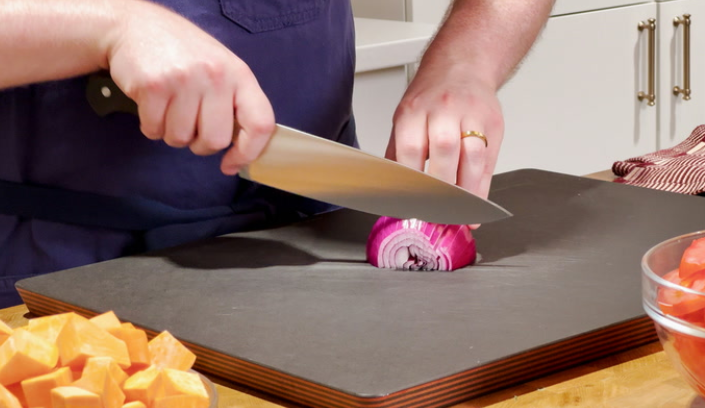
Honing and Sharpening: Learn the Difference
Honing is often confused with sharpening, but they are different processes. Honing realigns the blade’s edge without removing metal. You need to hone your knife with a honing steel prior to each use.
Place the steel vertically, tip down, on a cutting board. Draw the knife down and across the steel, maintaining an angle of 15-20 degrees. Do this 5-6 times per side. The knife will suddenly feel much sharper.
Metal is removed when sharpening to make a new edge. Home cooks generally sharpen every 3-6 months. The best results are obtained from a professional sharpening service, but quality home sharpening stones will work fine as well.
Using Sharpening Stones Correctly
Sharpening stones are available in various grits. Regrind damaged edges with a set of coarse stones (400-1000 grit). Medium stones (1000-3000 grit) are used to sharpen dull knives. Fine stones finish edges to an extreme sharpness (4000-8000 grit).
Soak the stones about 10-15 minutes before use. To avoid slipping, rest the stone on a damp towel. Maintain the appropriate angle (15 degrees for Japanese knives, 20 degrees for Western ones) and push the blade across the stone with smooth strokes.
Begin with a low setting and work up to higher ones. Start with 10-15 strokes per side on both stones. Check sharpness by cutting paper or a tomato gently. A sharp knife cuts with very little effort.
Professional Sharpening Services
If sharpening your own knives makes you squeamish, professional services can be worth the investment. There are a number of kitchen supply stores that provide sharpening for $5-$10 per knife. They’re equipped with special tools that can be used to create perfectly uniform edges.
Get your knives professionally sharpened once or twice a year. Even in between professional sharpenings, regular honing will help maintain the edge. The combination of these two methods allows for the sharpest knives to remain sharp.
Special Care for Different Materials
Diamond sharpeners are necessary for ceramic knives, which are harder than steel. Only sharpen when necessary: The knives hold their edge for years.
Damascus steel requires special care to maintain its pattern. Wipe clean and lightly oil the blade with food-safe mineral oil as needed. This prevents rust and keeps the layered steel pristine.
Carbon steel knives will rust if not well kept. A grey-blue patina is absolutely typical and in fact provides protection for the blade. Don’t try to remove it. Just make sure to keep the knife clean and dry.
The Cutting Board You Use Can Affect the Sharpness of Your Knife
More than you may realize, the durability of your knives depends on your cutting board. Blades go dull fast with hard surfaces, such as glass, marble or ceramic. These materials are harder than steel, meaning each cut dulls the edge.
Wood and bamboo are softer on knives. End-grain wooden boards are preferred because the knife edge moves between rather than cutting through the wood fibers. This preserves sharpness longer.
Plastic boards are also good, especially for raw meat. Pick soft plastic not hard. When boards get deep grooves, replace them; bacteria can lurk in the cuts.
Typical Errors That Make Sharp Knives Go Blunt
Steer clear of these bad habits that destroy knife edges in no time:
Using the incorrect knife for the task – A chef’s knife is not meant to be used to chop through bones or frozen food. These materials are difficult and cause the knife’s cutting edge to become uneven. Use a cleaver or saw.
Chopping from the wrong surface – Don’t chop directly on countertops, plates or boards that are made out of hard materials. Use a quality wooden or plastic cutting board at all times.
Poor storage – Rattling around in drawers, knives get chipped banging against other utensils. Protect blades with covers.
Ignoring upkeep – Sharpening is more difficult if you wait until a knife is completely dull. Frequent honing and prompt sharpening maintain a knife’s quality with far less work.
Using the dishwasher – The acidity of cleaning agents, the heat and jarring against other dishes takes a heavy toll on knife edges. Hand washing takes under 1 minute and your investment remains safe.
How to Measure Your Knife’s Sharpness
Wondering if your blade needs to be addressed? Try these simple tests:
The Paper Test
Take a piece of paper by one end. See if it cuts under the weight of the knife. A clean edge is created with a sharp knife and that means no tearing. A dull knife rips the paper or refuses to cut.
The Tomato Test
Place a tomato that’s perfectly ripe on the cutting board. A properly sharp knife will bite into the skin with hardly any downward pressure at all. If you have to push or saw, the blade is dull.
The Thumbnail Test
Heads up: Use this test very carefully. Carefully put the blade edge on your thumbnail, barely angled. A sharp edge will “bite” a bit to hold its position. A blunt edge will glide over the nail. There never should be pressure when you are doing this test.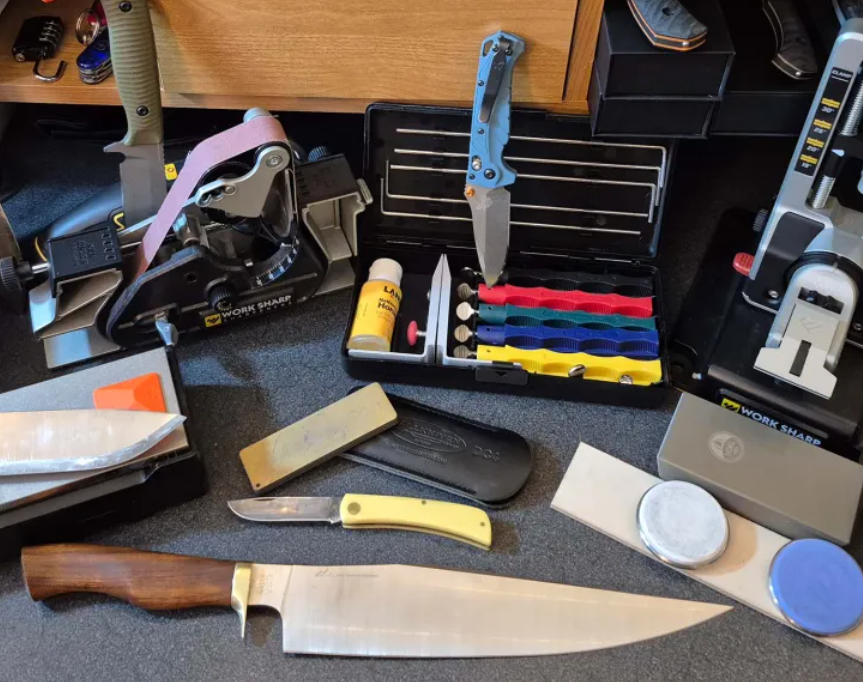
Frequently Asked Questions
How frequently should I sharpen my knives?
If you are an occasional cook, sharpening once or twice a year is fine. If you cook at home and use your knives daily, then knife sharpening every 3-6 months is ideal. Professional chefs might sharpen weekly. Hone your knife just before you use it to keep the edge between sharpenings.
Is there any way to sharpen ceramic knives at home?
Yes, but you have to get a diamond sharpener that is specifically for ceramics. Plain sharpening stones won’t work, because ceramic is harder than steel. Ceramic knives are difficult to sharpen properly, so many people opt to send them out to professionals.
How do German knives differ from Japanese ones?
German knives usually have thicker blades with 20-22 degree edge ground. They are long-lasting and well-suited to heavy-duty work. Japanese knives have thinner, lighter blades with sharper 15-degree edges. They’re great for close, delicate cuts, but need to be used with caution.
A more expensive knife is always a sharper knife, right?
Not necessarily. Price is often an indication of materials, craftsmanship, and brand reputation more than sharpness. A $50 knife that has been professionally sharpened can be sharper than a $200 dull one. But more expensive knives tend to hold their edge longer and be made of higher quality materials.
How do I know at what angle to sharpen my knife?
Check the manufacturer’s specifications. Japanese knives tend to use 15-degree angles per side. Western knives use 20-degree angles. If you’re not sure, 20 degrees is a good compromise that should work for most of your kitchen knives.
Can I sharpen it with a store-bought knife sharpener?
Pull-through sharpeners are easy, but they tend to remove too much metal and create uneven edges. They’re fine for cheap knives, but not great for well-made ones. Whetstones or professional sharpening are recommended for your sharpest knives.
The Bottom Line on Sharp Knives
Sharp knives make your cooking day that much better when you invest in the best. These are the seven best blades out there in 2025 offering the perfect balance of sharpness, quality and value. All of them have distinct purposes, so think about what kind of tasks you perform most often.
Keep in mind that even the sharpest knife can dull if it is not maintained. Promote good habits: Wash and dry by hand right after use, use the correct cutting boards, hone it before using and sharpen frequently. These easy habits will ensure your knives last like new for years.
A sharp knife is also a safer, faster and more pleasant knife to use than a dull one. Whether it is precision Japanese craftsmanship, German engineering or state-of-the-art ceramic technology, the right knife and good care will make you enjoy your adventure in the kitchen.
Begin with one good knife and learn how to take care of it. You can slowly build up your collection as you get comfortable with sharpening and maintaining them. As your knife skills get better, so will your cooking, and that means any meal preparation becomes faster and more fun.
The best knives are not simply a tool but also an accomplice in making delicious food. Select carefully, take good care of them — and love the difference they make to your kitchen.
